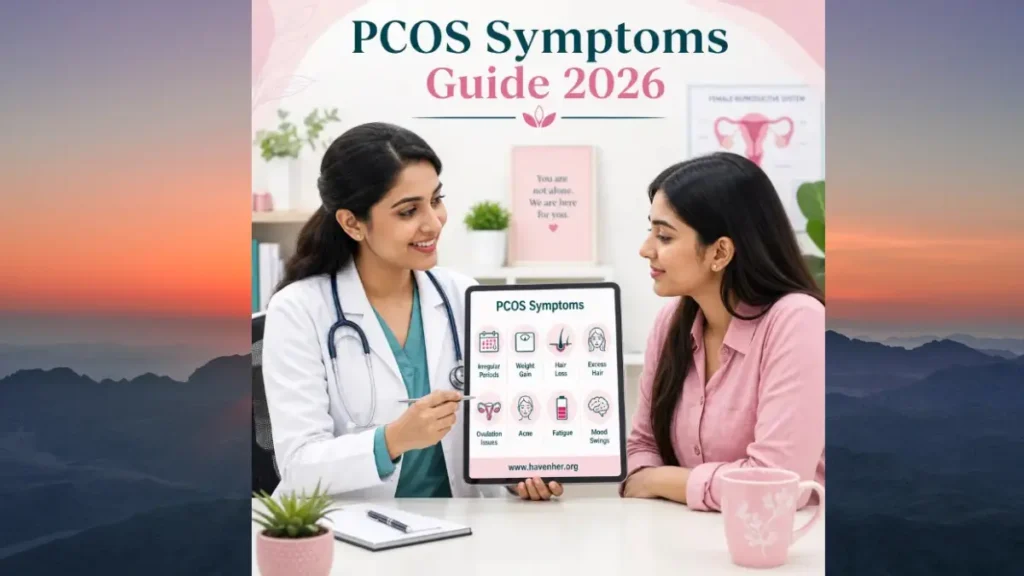

PCOS Symptoms Guide: 20 Signs, Causes and When to See a Doctor
Key Takeaways
- PCOS (Polycystic Ovary Syndrome) affects an estimated 5 to 18% of women of reproductive age worldwide, making it the most common hormonal disorder in this group. In May 2026, international guidelines renamed the condition PMOS (Polyendocrine Metabolic Ovarian Syndrome), though both terms are currently used in clinical practice.
- Symptoms vary significantly between individuals. You do not need to experience every symptom listed in this guide to have PCOS. Many women present with only two or three signs.
- The three diagnostic features recognised by the Rotterdam Criteria are irregular or absent periods, clinical or biochemical signs of androgen excess, and polycystic-appearing ovaries on ultrasound. Two of these three features are required for a PCOS diagnosis.
- PCOS symptoms and normal period symptoms overlap considerably. Understanding the key differences can prevent years of misattribution and delayed diagnosis.
- Early diagnosis matters. The average delay between first experiencing symptoms and receiving a formal PCOS diagnosis is over two years. Knowing what to look for can shorten that gap significantly.
- PCOS is a manageable condition. Targeted dietary changes, lifestyle adjustments, and clinical support produce meaningful improvements in most symptoms for the great majority of women.
- If you are in St. Petersburg or the wider Tampa Bay area and recognise symptoms described in this guide, Dr. Mehwish Saif at our affiliated practice can provide a comprehensive hormonal evaluation.
Introduction
PCOS is one of the most widely misunderstood conditions in women’s health. It is frequently diagnosed late, often misattributed to stress or lifestyle, and routinely reduced to the single issue of irregular periods. In reality, it is a complex, multi-system hormonal condition that can affect the skin, hair, weight, mood, sleep, fertility, and long-term metabolic health at the same time.
If your doctor mentioned “PMOS” instead of PCOS, read this to understand if your diagnosis will change under the new guidelines.
In May 2026, the International Evidence-Based Guideline issued an update renaming PCOS to PMOS, which stands for Polyendocrine Metabolic Ovarian Syndrome. The new name more accurately reflects the condition’s metabolic nature. The clinical recommendations and diagnostic criteria remain unchanged. Throughout this article, both terms are used to reflect current clinical practice.
This guide gives you a clear, evidence-based, and honest picture of what PCOS actually looks and feels like. It covers all 20 recognised symptoms, explains the biology behind each one, draws the important distinctions between PCOS symptoms and normal period-related changes, and provides a clear framework for knowing when to seek clinical evaluation.
If you already have a PCOS diagnosis and want to take immediate action, our 7-Day PCOS Meal Plan for Beginners and PCOS Insulin Resistance Diet Guide are the best starting points. If you want to understand which supplements have genuine clinical evidence, our PCOS Supplements Guide covers the evidence in full.
What Is PCOS and What Causes It?
PCOS is a hormonal and metabolic disorder characterised by androgen excess, disrupted ovulation, and in most but not all cases, polycystic-appearing ovaries on ultrasound. It is not a disease of the ovaries alone. It is a whole-body endocrine condition driven by dysfunction in the hypothalamic-pituitary-ovarian (HPO) axis and, in the majority of women, by insulin resistance.
Despite affecting between 5 and 18% of women of reproductive age globally, the exact cause of PCOS is not fully understood. Current evidence consistently points to a combination of genetic and environmental factors acting together. Craving something sweet? Try these 25 PCOS snacks that won’t spike your blood sugar. For a detailed, clinically-reviewed explanation, read our complete guide on What is PCOS?
Key Contributing Causes
- Insulin resistance: Present in up to 70% of women with PCOS regardless of body weight. When cells stop responding efficiently to insulin, the pancreas compensates by producing more. Excess circulating insulin then stimulates the ovaries to produce too much testosterone, triggering the androgen-driven symptoms that characterise PCOS.
- HPO axis disruption: The normal pulsatile rhythm of LH and FSH release from the pituitary gland becomes dysregulated. LH is secreted too frequently and in pulses that are too large, further stimulating ovarian androgen production while suppressing the FSH levels needed for normal follicle maturation and ovulation.
- Chronic low-grade inflammation: Women with PCOS consistently show measurably elevated inflammatory markers. This systemic inflammation activates both the adrenal glands and the ovaries to produce more androgens, while simultaneously worsening insulin resistance in a self-reinforcing cycle.
- Genetic predisposition: PCOS runs in families. If your mother, sister, or aunt has PCOS, your own risk is significantly elevated. Multiple genes influencing insulin signalling, androgen synthesis, and gonadotropin regulation have been identified as contributors, though no single gene causes the condition.
- Adrenal PCOS: In a subset of women, the adrenal glands are the primary source of excess androgens rather than the ovaries. This subtype is particularly responsive to stress management because the adrenal glands operate under direct control of the stress hormone cortisol. Our PCOS and Stress Guide provides the full clinical explanation of this mechanism.
🔬 Research Note: The 2026 Name Change In May 2026, the international steering body responsible for the Evidence-Based PCOS Guideline updated the condition’s name to Polyendocrine Metabolic Ovarian Syndrome (PMOS). The change followed two global Delphi surveys involving clinicians and patients worldwide.
The new term more accurately reflects the condition’s metabolic and multi-endocrine nature than the original name. The clinical recommendations and diagnostic criteria remain unchanged. Most clinicians, patients, and resources including HavenHer.org are currently using both PCOS and PMOS during the transition period.
How PCOS Is Diagnosed in 2026
PCOS is diagnosed clinically using the Rotterdam Criteria, which require the presence of at least two of the following three features:
- Oligo-ovulation or anovulation, meaning irregular or absent menstrual periods
- Clinical or biochemical signs of hyperandrogenism, meaning excess androgens detected in blood tests or visible signs such as excess hair growth or acne
- Polycystic ovary morphology on pelvic ultrasound or elevated anti-Müllerian hormone (AMH) levels
There is no single blood test or scan that diagnoses PCOS on its own. A thorough evaluation includes a detailed clinical history, full symptom review, a hormonal blood panel, and pelvic ultrasound. It also requires ruling out conditions that can produce similar symptoms, including thyroid disorders, hyperprolactinaemia, and congenital adrenal hyperplasia.
Supplements recommended in the new PMOS diet plan. Compare PCOS vs PMOS nutrition.
💡 Expert Insight from Dr. Mehwish Saif, Consultant Gynaecologist Many women come to our practice having waited years before seeking evaluation because they assumed that irregular periods and acne were simply normal for them. In most published studies, the average delay between first experiencing PCOS symptoms and receiving a formal diagnosis is over two years.
At our St. Petersburg practice, a comprehensive PCOS evaluation includes a full hormonal panel, metabolic assessment, and pelvic ultrasound, so that we can give every woman a clear and complete clinical picture. If you recognise symptoms described in this guide, please do not wait. Contact us directly at 001 716 295 1575 or email info@havenher.org.
20 Common PCOS Symptoms
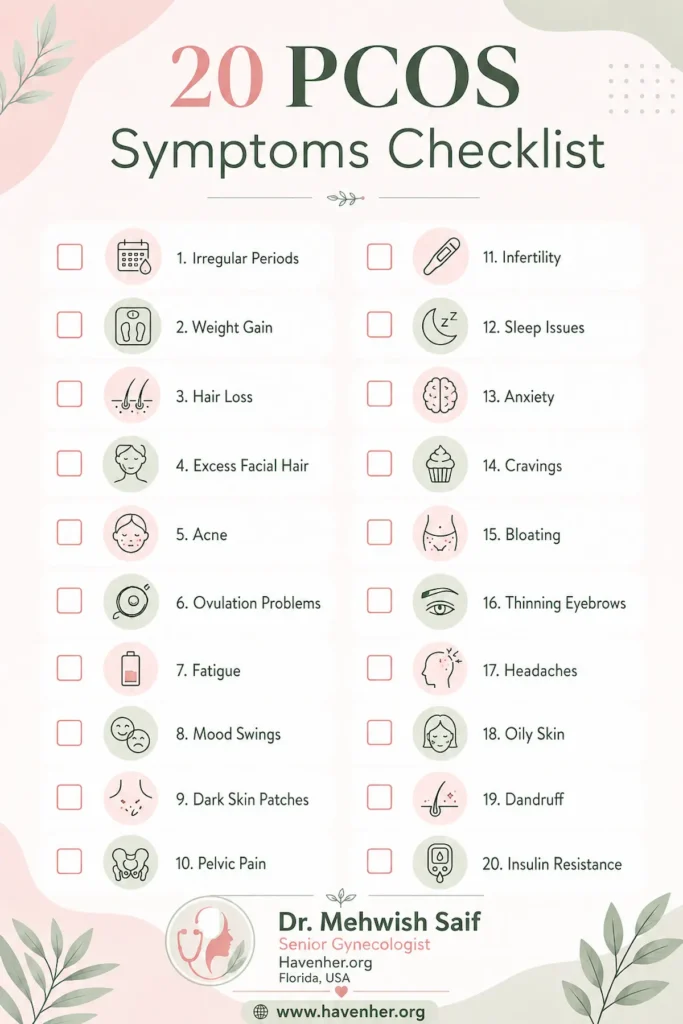
The following 20 symptoms represent the full clinical picture of PCOS as documented in peer-reviewed research and current international clinical guidelines. Not every woman with PCOS experiences all 20. Most women present with between 3 and 7 symptoms. What matters most is recognising the overall pattern.
Save this check list and tick the symptoms you are experiencing:
How is PCOS Diagnosed?
1. Irregular or Absent Periods
This is the most common and most clinically significant PCOS symptom. Irregular periods in the context of PCOS typically mean cycles that are longer than 35 days, fewer than eight periods per year, no period at all for three or more consecutive months, or cycle lengths that are highly unpredictable and vary widely from one month to the next. The underlying cause is anovulation. Without regular ovulation, the hormonal sequence that normally triggers a period does not complete.
2. Heavy Periods When They Do Occur
Because many women with PCOS go weeks or even months without a period, the uterine lining (endometrium) continues to build up without being shed. When a period eventually arrives, it can be unusually heavy and more prolonged than typical. This is not a separate disorder from PCOS but a direct consequence of infrequent menstrual shedding.
3. Excess Facial and Body Hair (Hirsutism)
Hirsutism is the growth of coarse, dark hair in areas typical of male-pattern hair distribution: the upper lip, chin, cheeks, chest, abdomen, inner thighs, and lower back. It affects up to 70% of women with PCOS and is directly caused by elevated androgens stimulating hair follicles in these androgen-sensitive areas. Hirsutism is one of the clearest clinical markers of androgen excess and is taken seriously as a diagnostic indicator from the very first consultation.
4. Scalp Hair Thinning or Hair Loss
While excess hair grows in androgen-sensitive body areas, the scalp responds to androgen excess in the opposite direction. Hair follicles on the scalp are sensitive to dihydrotestosterone (DHT), a potent derivative of testosterone. DHT shortens the active growth phase of the hair cycle, resulting in finer, shorter hair and progressive thinning, particularly at the crown and temples. This pattern is called androgenic alopecia. It is frequently mistaken for stress-related hair loss, which delays accurate diagnosis.
5. Hormonal Acne
PCOS-related acne is driven by elevated androgens stimulating the sebaceous glands in the skin to produce excess sebum. The result is deep, cystic, and often painful acne that clusters along the jawline, chin, and cheeks, and sometimes extends to the back and chest. Unlike teenage acne, PCOS acne persists or worsens into adulthood and does not respond well to standard topical treatments because the underlying hormonal driver remains active.
6. Persistently Oily Skin
Excess sebum production, which is the same mechanism responsible for PCOS acne, also results in persistently oily skin even in women who have never experienced this before. This often develops or worsens in the late teens and early twenties, typically alongside the onset of other PCOS symptoms.
7. Weight Gain or Difficulty Losing Weight
Weight gain in PCOS, particularly around the abdomen, is driven primarily by insulin resistance. When cells are resistant to insulin, the body compensates by producing more of it. Chronically high insulin levels promote fat storage, especially visceral fat around the abdominal organs, and actively inhibit the breakdown of existing fat stores even when caloric intake is reduced.
This explains why standard calorie-cutting diets often produce limited results in women with PCOS without first addressing the underlying insulin dysregulation. Our guide on Why Am I Not Losing Weight on a PCOS Diet? covers the seven hidden reasons behind this in full detail.
8. Difficulty Conceiving (Infertility)
PCOS is the single most common cause of anovulatory infertility worldwide. Without regular ovulation, there is no egg available to be fertilised. However, PCOS-related infertility is also one of the most treatable forms of infertility, and the great majority of women who seek appropriate clinical care do go on to conceive successfully. Our comprehensive guide to How to Get Pregnant With PCOS covers every stage of the evidence-based fertility journey in detail.
9. Pelvic Pain
Some women with PCOS experience dull or chronic pelvic pain and cramping that is unrelated to their period, or more intense cramping when a period does eventually arrive after a long gap. Pelvic pain in PCOS may also be related to enlarged, follicle-filled ovaries pressing on surrounding structures. It is important to note that severe or persistent pelvic pain always warrants clinical evaluation to rule out endometriosis, which can co-exist with PCOS.
10. Insulin Resistance and Blood Sugar Instability
Up to 70% of women with PCOS have measurable insulin resistance independent of their body weight. Women often notice signs of insulin resistance before ever receiving a formal diagnosis. These signs include intense hunger shortly after eating, afternoon energy crashes, strong cravings for sugar or refined carbohydrates, persistent brain fog, and difficulty concentrating. These are the metabolic signals of cells failing to efficiently absorb glucose from the bloodstream.
11. Darkened Skin Patches (Acanthosis Nigricans)
Acanthosis nigricans presents as velvety, darkened patches of skin that develop in body folds and creases: the back of the neck, the armpits, the groin, and beneath the breasts. It is a direct skin response to chronically elevated insulin levels and is considered a visible clinical marker of significant insulin resistance. It is more common in women with darker skin tones and in women with more pronounced insulin resistance.
12. Skin Tags
Small, soft skin growths known as skin tags, appearing in skin fold areas, are also associated with chronic insulin excess. They frequently co-occur with acanthosis nigricans in women with PCOS who have significant insulin resistance.
13. Fatigue
Persistent fatigue in PCOS has several contributing drivers. Blood sugar instability from insulin resistance produces cyclical energy crashes throughout the day. Poor sleep quality, particularly where obstructive sleep apnea is present, prevents genuine rest. Elevated systemic inflammation compounds the exhaustion. In some women, co-existing thyroid dysfunction adds to the burden. Women with PCOS frequently describe feeling exhausted despite what appears to be a normal amount of sleep, which is one of the reasons that sleep apnea screening is now recommended as a standard part of the PCOS clinical evaluation process.
14. Sleep Disturbance and Obstructive Sleep Apnea
Research published in 2024 and 2025 to inform the current International PCOS Guidelines found that women with PCOS carry a significantly elevated risk of obstructive sleep apnea (OSA). Estimates suggest that OSA affects between 17 and 75% of women with PCOS depending on BMI and androgen levels.
Elevated androgens reduce the tone of the muscles supporting the upper airway during sleep, increasing the risk of airway collapse. OSA causes fragmented, non-restorative sleep and independently worsens insulin resistance, fatigue, and mood, creating a compounding cycle that is very difficult to manage without identifying and treating the sleep component.
15. Mood Disturbances, Anxiety, and Depression
Women with PCOS are 2.5 times more likely to experience depression than women without the condition. A 2024 meta-analysis found depressive disorder prevalence of 34.8% and anxiety symptoms of up to 69% measured by validated scales in women with PCOS. These elevated rates are not simply a psychological response to a difficult diagnosis. They reflect direct neurobiological mechanisms: androgens, insulin resistance, chronic inflammation, and disrupted sleep all influence serotonin and dopamine signalling in the brain. The mental health burden of PCOS is a clinical reality that deserves exactly the same attention and care as any physical symptom.
16. Headaches and Migraines
Hormonal fluctuations, particularly the erratic oestrogen and progesterone patterns caused by irregular ovulation in PCOS, are associated with an increased frequency of headaches and migraines in some women. These typically worsen around the time of an expected period or following the hormonal shifts that accompany sporadic ovulation.
17. Bloating and Digestive Discomfort
Bloating is commonly reported by women with PCOS. Research published in 2025 confirmed measurable differences in gut microbiota composition in women with PCOS compared to healthy controls, and disruption to the gut microbiome contributes to bloating and digestive irregularity. Insulin resistance also has direct effects on digestive motility, and diets high in sugar and refined carbohydrates, which frequently accompany untreated insulin resistance, further worsen gut symptoms.
18. Low Libido
Although PCOS is associated with elevated androgens which might theoretically increase libido, the opposite is more frequently reported by women with the condition. The combination of persistent fatigue, poor sleep, body image concerns, pelvic discomfort, hormonal disruption, and the ongoing psychological weight of managing a chronic condition all contribute to reduced sexual drive. This symptom is rarely raised in clinical consultations but it is entirely worth discussing with your healthcare provider.
19. Increased Risk of Type 2 Diabetes
The insulin resistance at the metabolic core of PCOS places women at a significantly elevated risk of developing type 2 diabetes. Research estimates that up to 10% of women with PCOS have undiagnosed type 2 diabetes, and a considerably larger proportion have prediabetes or impaired glucose tolerance without being aware of it. The US Food and Drug Administration identifies diabetes as one of the key long-term health risks associated with PCOS. This risk makes regular glucose and insulin monitoring an essential part of ongoing PCOS management, not just at initial diagnosis.
20. Elevated Cardiovascular Risk Markers
Women with PCOS have measurably higher rates of hypertension, dyslipidaemia (elevated triglycerides and low HDL cholesterol), and systemic inflammation compared to age-matched women without PCOS. A 2024 systematic review published in the Journal of the American Heart Association formally confirmed elevated clinical cardiovascular disease risk in the PCOS population.
These are largely silent risk factors with no obvious day-to-day symptoms, but they substantially increase lifetime cardiovascular risk. This is why a full lipid panel and blood pressure measurement are recommended components of the initial PCOS assessment, not optional additions.
⚠️ Important Clinical Note Having polycystic-appearing ovaries on ultrasound does not automatically mean you have PCOS. Many women have multiple small follicles visible on their ovaries without the hormonal features that define the condition. Equally important, a normal-appearing ovary on ultrasound does not rule out PCOS if the other diagnostic criteria are present. Diagnosis requires a full clinical evaluation and not a scan result alone.
PCOS Symptoms vs Normal Period Symptoms
Many individual symptoms of PCOS are easily dismissed as normal variations in menstrual experience. The distinction matters because earlier recognition leads to earlier management and genuinely better outcomes. The following comparisons are designed to help you identify when a symptom pattern moves from the range of normal variation into territory that warrants a clinical evaluation.
Irregular Periods: Normal Variation vs PCOS Signal
Occasional cycle irregularity is common and very often benign. Periods can shift in response to illness, travel, significant psychological stress, or changes in exercise intensity. A normal menstrual cycle ranges from 21 to 35 days. What falls outside the normal range includes cycles that are consistently longer than 35 days, fewer than eight periods in a calendar year, periods that stop entirely for three or more consecutive months outside of pregnancy, and cycle lengths that vary unpredictably month to month with no discernible pattern.
If your irregularity is consistent and persistent rather than occasional and circumstantial, it warrants a formal evaluation.
Acne: Normal Hormonal Breakouts vs PCOS Acne
Hormonal acne related to the menstrual cycle is extremely common, typically appearing in the week before a period along the jawline and chin. PCOS acne is different in several distinct ways. It is persistent and not limited to the premenstrual window. It is deeper and more severe, tending to be cystic and painful rather than superficial. It often spreads to the back, chest, and shoulders in addition to the face.
It is resistant to standard acne treatments including topical retinoids and antibiotics. And it continues or worsens into the mid-twenties and beyond, at an age when most women expect teenage breakouts to have resolved.
Hair Changes: Normal Shedding vs PCOS Pattern
It is entirely normal to shed between 50 and 100 hairs per day. Temporary increases in shedding occur commonly after illness, childbirth, surgery, or significant nutritional depletion. PCOS-related hair changes are different in pattern. Scalp thinning occurs specifically at the crown and along the hairline, which is the classic androgenic alopecia distribution, rather than presenting as diffuse shedding all over the scalp.
Crucially, the thinning on the scalp often occurs simultaneously with the appearance of excess coarse hair growth in androgen-sensitive areas of the body. This simultaneous combination of thinning in one location and thickening in others is the distinguishing clinical feature.
Weight Changes: Normal Fluctuation vs PCOS-Related Gain
Weight fluctuations of two to five pounds across a menstrual cycle are entirely normal and are driven by fluid retention and glycogen storage changes. PCOS-related weight gain has a different character. It is progressive rather than cyclical. It is predominantly abdominal. It is disproportionate to caloric intake. It resists standard dietary interventions. And it is typically accompanied by the other insulin resistance markers described in this guide: darkened skin patches, skin tags, afternoon energy crashes, and intense cravings for refined carbohydrates.
Fatigue: Normal Period Tiredness vs PCOS Fatigue
Mild fatigue in the days before and during a period is very widely reported and represents a normal physiological effect of the progesterone rise and fall in the late luteal phase. PCOS-related fatigue is meaningfully different. It is persistent throughout the entire cycle, not limited to the perimenstrual days. It is frequently accompanied by sleep that feels unrefreshing regardless of duration. It is often described as a physical and cognitive heaviness that rest does not resolve. Fatigue of this character warrants clinical investigation.
| Symptom | Normal Period Experience | PCOS Signal |
|---|---|---|
| Cycle length | 21 to 35 days, relatively consistent each month | Consistently over 35 days, or fewer than 8 periods per year |
| Acne | Premenstrual breakouts, surface-level, resolve after period begins | Deep cystic acne, persistent throughout cycle, on face, back and chest, resistant to standard treatment |
| Body hair growth | Normal body hair in typical female distribution | Coarse dark hair on chin, upper lip, chest, abdomen, or inner thighs |
| Scalp hair | Normal daily shedding, possible temporary increase following illness | Progressive thinning at crown and temples following androgenic pattern |
| Weight | 2 to 5 lb cyclical fluctuation driven by fluid and glycogen | Progressive abdominal weight gain that resists dietary changes |
| Fatigue | Mild tiredness around the period, resolves within a few days | Persistent throughout the full cycle, unrefreshing sleep, cognitive fogginess |
| Mood changes | PMS in the week before the period, clears with the onset of bleeding | Persistent anxiety or low mood across the full cycle, not limited to one week |
| Skin | Mild cyclical oiliness or dryness | Consistently oily skin and dark velvety patches in skin folds (acanthosis nigricans) |
PCOS Symptoms Across Different Life Stages
Adolescence (Ages 13 to 18)
PCOS frequently begins around puberty when the HPO axis first activates, but it is particularly difficult to diagnose in adolescence because many of its features overlap with normal puberty-related changes. Irregular periods in the first two years after menstruation begins are considered a normal part of the pubertal transition. However, irregular cycles that persist beyond two years after the first period, severe acne that does not respond to standard treatment, and visible excess facial or body hair in a male-pattern distribution are legitimate early PCOS signals in teenagers that warrant clinical assessment rather than reassurance and dismissal.
Reproductive Years (Ages 18 to 45)
This is the life stage when PCOS is most commonly diagnosed. The diagnosis is typically prompted by one of three events: difficulty conceiving, persistent acne or hirsutism that leads a woman to a dermatologist who identifies the hormonal pattern, or clinical investigation of irregular periods. The full range of all 20 symptoms described in this guide may manifest during these years. Metabolic consequences including insulin resistance, prediabetes, and elevated cardiovascular risk markers accumulate silently across this period when PCOS goes unmanaged, which is one of the strongest arguments for early diagnosis and consistent management.
Perimenopause and Beyond
PCOS does not resolve at menopause. The metabolic risk accumulated during the reproductive years, particularly elevated cardiovascular risk and diabetes risk, persists and may intensify in the perimenopausal period as additional hormonal shifts occur. Some women find that the androgen-driven symptoms of hirsutism and acne actually improve somewhat in later life as oestrogen declines and the androgen-to-oestrogen ratio shifts.
However, the underlying metabolic dysregulation requires continued monitoring. Women with PCOS entering perimenopause should ensure their metabolic health is formally assessed. Our guide to Menopause Symptoms at Age 40 covers the perimenopausal transition in detail, and you can also read our detailed perimenopause symptoms at 35, 40, and 45: what is normal and when to worry for an age-wise breakdown.
Conditions That Mimic PCOS
Before a PCOS diagnosis can be confirmed, other conditions that produce similar symptoms must be systematically excluded. This is an essential and non-negotiable step in any competent clinical evaluation.
- Hypothyroidism: An underactive thyroid produces irregular periods, weight gain, hair changes, fatigue, and mood disturbance, all of which overlap significantly with PCOS. Thyroid function testing including TSH, free T3, and free T4 is a required component of any PCOS evaluation.
- Hyperprolactinaemia: Elevated prolactin levels arising from a pituitary adenoma or other causes can produce irregular or absent periods and may initially appear very similar to PCOS. A serum prolactin blood test distinguishes the two conditions.
- Congenital adrenal hyperplasia (CAH): This genetic condition affects cortisol production and leads to androgen excess, producing hirsutism, acne, and irregular periods that closely mimic PCOS. A morning 17-hydroxyprogesterone blood test is used to screen for this condition.
- Cushing’s syndrome: Excess cortisol production from a tumour or other source causes central weight gain, irregular periods, and acne. It is rare but can mimic PCOS very closely and must be excluded in appropriate clinical contexts.
- Endometriosis: This condition can co-exist with PCOS and shares overlapping features including irregular bleeding and pelvic pain. Its primary driver, however, is abnormal endometrial tissue growth rather than androgen excess, and the two conditions require different management approaches.
When to See a Doctor for PCOS
Do not wait until all 20 symptoms are present. Seek a clinical evaluation if you have experienced any of the following consistently over a period of three or more months.
See a Doctor If You Have:
- Periods that are consistently longer than 35 days apart, or fewer than eight per year
- No period at all for three or more consecutive months when you are not pregnant
- Persistent, cystic, or severe acne that has not responded to standard treatments after three months
- Coarse dark hair growing on the face, chin, chest, abdomen, inner thighs, or lower back
- Scalp hair thinning at the crown or temples in a pattern that cannot be explained by stress or nutritional deficiency
- Progressive weight gain particularly around the abdomen that does not respond to dietary changes
- Dark, velvety patches of skin in body fold areas including the armpits, neck, or groin
- Difficulty conceiving after six months of regular unprotected intercourse if you have irregular periods, or after 12 months if your cycles are regular
- Persistent fatigue, brain fog, or blood sugar instability that is not explained by another identified cause
- A family history of PCOS, type 2 diabetes, or cardiovascular disease combined with any of the symptoms above
💡 Expert Insight from Dr. Mehwish Saif, Consultant Gynaecologist In my clinical experience across the Tampa Bay area, the women who benefit most from early PCOS evaluation are those who come in before they are trying to conceive, before the metabolic consequences have had years to accumulate, and before unexplained symptoms have taken a significant toll on their confidence and mental health. PCOS is highly manageable when it is caught and addressed early.
If any combination of the symptoms described in this guide resonates with your own experience, please reach out to us. We offer comprehensive PCOS evaluations at our St. Petersburg practice. You can contact us at 001 716 295 1575, on WhatsApp at 001 716 295 1575, or by email at info@havenher.org. Our practice is located at 7901 4th St N, STE 17639, St. Petersburg, FL 33702.
Seek Urgent Evaluation If You Have:
- Sudden and severe pelvic pain that comes on acutely
- Very heavy menstrual bleeding that soaks more than one pad per hour for two or more consecutive hours
- No period for six or more months when you are not pregnant
- Symptoms that suggest diabetes: extreme thirst, unusually frequent urination, blurred vision, or numbness or tingling in the hands or feet
What Happens at a PCOS Consultation?
Knowing what to expect from a PCOS clinical evaluation helps remove the anxiety that so often delays women from booking one in the first place.
A comprehensive PCOS consultation at a practice experienced in managing the condition should include:
- Full symptom history: the onset, pattern, and severity of each symptom, and how long you have been experiencing it
- Menstrual history: cycle length, regularity, heaviness, and any episodes of amenorrhoea
- Family history: PCOS, diabetes, cardiovascular disease, and thyroid conditions in first-degree relatives
- Comprehensive blood panel: total testosterone, free testosterone, DHEA-S, LH, FSH, prolactin, TSH, free T3 and T4, fasting insulin, fasting glucose, HOMA-IR, full lipid panel, AMH, and 25-hydroxyvitamin D
- Pelvic ultrasound: to assess ovarian morphology, antral follicle count, uterine appearance, and endometrial thickness
- Physical examination: formal assessment of hirsutism using the Ferriman-Gallwey scoring system, blood pressure measurement, BMI calculation, and skin examination for acanthosis nigricans
- Exclusion bloodwork: 17-hydroxyprogesterone to exclude congenital adrenal hyperplasia, and cortisol if Cushing’s syndrome is clinically suspected
Based on the results, a personalised management plan is developed. This may include dietary changes, structured exercise recommendations, targeted supplements, medications to regulate the cycle or reduce androgen levels, or fertility support, depending entirely on your individual situation and your own priorities.
Quick Reference Table 1: 20 PCOS Symptoms at a Glance
| Number | Symptom | Underlying Driver | How Common in PCOS |
|---|---|---|---|
| 1 | Irregular or absent periods | Anovulation from HPO axis disruption | Most common feature, approximately 80% of women with PCOS |
| 2 | Heavy periods when they occur | Endometrial build-up from infrequent shedding | Common in women with oligomenorrhoea |
| 3 | Excess facial and body hair (hirsutism) | Androgen excess stimulating hair follicles | Up to 70% of women with PCOS |
| 4 | Scalp hair thinning (androgenic alopecia) | DHT shortening the scalp hair growth cycle | Significant proportion, frequently underreported |
| 5 | Hormonal cystic acne | Androgen-driven sebaceous gland overactivity | Common, particularly along the jawline and on the back |
| 6 | Persistently oily skin | Excess sebum production from androgen excess | Common, frequently co-occurs with acne |
| 7 | Abdominal weight gain or difficulty losing weight | Insulin resistance driving visceral fat storage | 40 to 80% of women with PCOS |
| 8 | Difficulty conceiving | Anovulation preventing egg release | Leading cause of anovulatory infertility globally |
| 9 | Pelvic pain | Enlarged follicle-filled ovaries, systemic inflammation | Reported by a significant subset of women |
| 10 | Insulin resistance and blood sugar instability | Cellular resistance to insulin signalling | Up to 70% regardless of body weight |
| 11 | Dark skin patches (acanthosis nigricans) | Chronic hyperinsulinaemia stimulating skin cell growth | Correlates with the degree of insulin resistance |
| 12 | Skin tags | Insulin excess in skin fold areas | Associated with the insulin-resistant subset |
| 13 | Persistent fatigue | Blood sugar instability, poor sleep quality, systemic inflammation | Very commonly reported across all PCOS phenotypes |
| 14 | Sleep disturbance and sleep apnea | Androgen-reduced airway muscle tone during sleep | 17 to 75% depending on BMI and androgen levels |
| 15 | Anxiety and depression | Neurobiological effects of androgens, insulin resistance, and chronic inflammation | Depression 34.8%, anxiety up to 69% on validated scales |
| 16 | Headaches and migraines | Erratic oestrogen and progesterone fluctuations from irregular ovulation | More common in women with PCOS than in the general population |
| 17 | Bloating and digestive discomfort | Gut microbiome disruption, insulin effects on digestive motility | Frequently reported, confirmed by 2025 microbiome research |
| 18 | Low libido | Fatigue, sleep disruption, mood changes, body image concerns | Often underreported in clinical settings but clinically relevant |
| 19 | Elevated diabetes risk | Progressive insulin resistance | Up to 10% have undiagnosed type 2 diabetes at time of PCOS diagnosis |
| 20 | Elevated cardiovascular risk markers | Dyslipidaemia, hypertension, chronic systemic inflammation | Formally confirmed by 2024 JAHA systematic review and meta-analysis |
Quick Reference Table 2: When to See a Doctor
| Scenario | Recommended Action | Timeframe |
|---|---|---|
| Cycles consistently over 35 days | Book a gynaecology evaluation | After 3 consecutive cycles of this length |
| Fewer than 8 periods per year | Book a gynaecology evaluation with full hormonal blood panel | Seek evaluation now, do not wait |
| Persistent cystic acne not responding to treatment | Request PCOS hormonal screening from your GP or gynaecologist | After 3 months of treatment failure |
| Excess facial or body hair in male-pattern distribution | Book hormonal evaluation including testosterone and DHEA-S | Seek evaluation now, do not wait |
| Difficulty conceiving with irregular periods | Seek fertility evaluation without waiting the standard 12 months | As soon as you are actively trying to conceive |
| Severe or sudden pelvic pain | Seek urgent medical assessment to rule out an acute cause | Immediately, do not delay |
| No period for 3 or more consecutive months | Take a pregnancy test first, then see your GP or gynaecologist if negative | Within 2 to 4 weeks of the missed third period |
| Heavy bleeding soaking more than 1 pad per hour | Urgent medical review, same day if possible | Same day |
Frequently Asked Questions
Can you have PCOS without irregular periods?
Yes. Under the Rotterdam Criteria, only two of the three diagnostic features are required for a PCOS diagnosis. Some women with PCOS have regular menstrual cycles but still carry the condition through androgen excess and polycystic ovary morphology on ultrasound, without cycle disruption. This is sometimes called non-classic PCOS or Phenotype D. These women may have a milder hormonal presentation but they still carry real metabolic and fertility risks that require management.
Can you have PCOS without cysts on your ovaries?
Yes. Despite the name, the ovarian follicles visible on ultrasound in PCOS are not actually cysts in the clinical sense. They are small, immature follicles that failed to ovulate. More importantly, under the Rotterdam Criteria and the 2023 International PCOS Guidelines, polycystic ovary morphology on ultrasound is only one of three diagnostic features and is not required if the other two criteria are met. A normal-appearing ovary on ultrasound does not rule out PCOS.
Is PCOS the same as PMOS?
Yes. They refer to the same condition. In May 2026, the international clinical guideline body renamed PCOS to PMOS (Polyendocrine Metabolic Ovarian Syndrome) to more accurately reflect the condition’s metabolic and multi-endocrine nature. The diagnostic criteria and all clinical recommendations remain unchanged. Most clinicians and patients are currently using both terms during the transition period.
Does PCOS go away on its own?
PCOS does not resolve on its own, but its symptoms can be significantly reduced and in some cases largely controlled through dietary change, lifestyle optimisation, targeted supplementation, and where appropriate, clinical treatment. Some women experience a considerable reduction in their most disruptive symptoms with consistent nutritional and lifestyle management. The underlying hormonal predisposition, however, remains a lifelong consideration and continues to require awareness and monitoring.
Can thin women have PCOS?
Yes. Between 20 and 30% of women with PCOS are within a healthy weight range. These women typically present primarily with the reproductive and androgenic features of PCOS, such as irregular periods, hirsutism, and acne, rather than weight-related features. They may still have measurable insulin resistance despite a normal BMI. Lean PCOS is a recognised and clinically important subtype. Do not assume PCOS is absent simply because weight is not a concern.
What is the first test a doctor should order for PCOS?
A comprehensive first PCOS evaluation should include total and free testosterone, DHEA-S, LH, FSH, AMH, prolactin, TSH to exclude thyroid disease, fasting insulin and fasting glucose, HOMA-IR, a full lipid panel, and 25-hydroxyvitamin D. A pelvic ultrasound to assess ovarian morphology and antral follicle count is also a core component of the diagnostic process.
Can stress cause PCOS symptoms to worsen?
Yes, meaningfully so. Chronic stress elevates cortisol, which worsens insulin resistance and directly stimulates adrenal androgen production. In women with adrenal PCOS, stress is a primary hormonal driver rather than a secondary influence. This is one of the most clinically underappreciated aspects of PCOS management, and one of the most actionable. Our PCOS and Stress Guide explains the full HPA axis mechanism and covers evidence-based stress management approaches in detail.
Is PCOS more common in certain ethnic groups?
PCOS affects women of all ethnicities, but the prevalence, symptom expression, and metabolic risk profile all vary. Research consistently shows higher rates of insulin resistance and type 2 diabetes risk in Hispanic, South Asian, and Black women with PCOS compared to white European women at the same BMI. Florida’s large Hispanic, Caribbean-American, and Black communities carry elevated PCOS prevalence and metabolic risk, which makes culturally aware and sensitive clinical care particularly important in the Tampa Bay area.
Can PCOS be cured?
PCOS cannot currently be cured in the sense of permanently eliminating the underlying hormonal predisposition. However, it is highly manageable. Many women achieve near-complete resolution of their most disruptive symptoms through a well-designed combination of dietary change, structured exercise, stress management, targeted supplementation, and where clinically indicated, medication. The realistic goal of PCOS management is not cure but effective, sustainable symptom control and consistent reduction of long-term metabolic risk. Our 7-Day PCOS Meal Plan and PCOS Grocery List are the ideal places to begin.
How do I know if I have PCOS or just irregular periods?
The key distinguishing factor is the hormonal pattern underlying the irregularity. Isolated irregular periods can arise from many causes: psychological stress, rapid weight change, thyroid dysfunction, or normal variation at certain life stages such as puberty or perimenopause.
PCOS involves irregular periods alongside at least one other feature: clinical signs of androgen excess such as hirsutism, acne, or scalp thinning; biochemical androgen excess confirmed on blood testing; or polycystic ovary morphology on ultrasound. If you have irregular periods plus any of the other 19 symptoms described in this guide, a formal hormonal evaluation is the right next step.
What should I eat if I have PCOS symptoms?
The dietary pattern with the strongest evidence for improving the PCOS hormonal and metabolic environment is one that is low-glycaemic, high in protein, and anti-inflammatory. This means prioritising low-GI carbohydrates such as sweet potato, oats, quinoa, and legumes; eating 25 to 35 grams of protein at every meal; including omega-3 rich fats from fatty fish, olive oil, and avocado; and minimising ultra-processed food and added sugar throughout the day. For a fully structured practical approach, our PCOS Insulin Resistance Diet Guide and PCOS Grocery List give you everything you need to start making meaningful changes today.
Conclusion
PCOS is one of the most common hormonal conditions affecting women of reproductive age, and yet it remains one of the most commonly delayed in diagnosis. The 20 symptoms described in this guide span the reproductive, metabolic, dermatological, psychological, and cardiovascular systems. That breadth is not coincidental. It reflects the fact that PCOS is not a condition of a single organ but a whole-body hormonal pattern with a coherent, well-understood underlying biology.
The most important message from this guide is a simple one: earlier recognition leads to better outcomes. The symptoms are not random, and they are not simply normal variations in women’s health. They are a recognisable hormonal pattern that responds well to targeted intervention when it is identified and addressed in good time.
If you recognise your own experience in the symptoms described here, the right next step is a clinical evaluation. Not a self-diagnosis based on an online checklist, and not another six months of waiting and hoping things resolve on their own. A proper hormonal assessment typically takes one morning appointment, provides you with clear clinical answers, and opens the door to a management approach that can produce real, lasting improvement in how you feel every day.
For women in the Tampa Bay area, Dr. Mehwish Saif’s practice is available for this kind of comprehensive PCOS evaluation. Please reach out:
📍 7901 4th St N, STE 17639, St. Petersburg, FL 33702
📞 001 716 295 1575
💬 WhatsApp: 001 716 295 1575
✉️ info@havenher.org
For the next steps after your diagnosis, explore our full evidence-based guide library:
- 7-Day PCOS Meal Plan for Beginners
- PCOS Insulin Resistance Diet Guide
- PCOS Grocery List: Foods to Eat and Avoid
- PCOS Supplements That Actually Work
- PCOS and Stress: How Cortisol Is Wrecking Your Hormones
- How to Get Pregnant With PCOS: A Step-by-Step Guide
- Why Am I Not Losing Weight on a PCOS Diet?
- PCOS Breakfast Ideas for Weight Loss
- 20 PCOS Dinner Ideas
About This Article
This guide was researched and written by the HavenHer editorial team. It has been clinically reviewed, verified, and personally approved by Dr. Mehwish Saif, Consultant Gynaecologist, practising at 7901 4th St N, STE 17639, St. Petersburg, Florida 33702. Dr. Saif has reviewed all diagnostic criteria, symptom descriptions, clinical thresholds, and when-to-seek-help guidance for accuracy and full compliance with the 2023 International Evidence-Based PCOS Guidelines (updated in May 2026 with the PMOS renaming) and current United States clinical practice standards. HavenHer.org is committed to publishing women’s health education to the highest possible editorial and clinical standards.
Medical Disclaimer
The information provided in this article is for general educational purposes only. It does not constitute medical advice, diagnosis, or treatment of any kind. PCOS symptoms vary significantly between individuals and can overlap with other conditions that require different clinical management. Do not self-diagnose based on this article. Always consult with a qualified healthcare provider for a formal clinical evaluation. If you are experiencing acute or severe symptoms including sudden pelvic pain, very heavy bleeding, or symptoms consistent with diabetes, seek immediate medical care.
References and Authoritative Resources
All references listed below have been verified by Dr. Mehwish Saif and reflect the current evidence base as of August 2026.
- Teede HJ, et al. Recommendations From the 2023 International Evidence-based Guideline for the Assessment and Management of Polycystic Ovary Syndrome. Journal of Clinical Endocrinology and Metabolism. 2023;108(10):2447. doi:10.1210/clinem/dgad463. academic.oup.com
- Monash University. 2023 International Evidence-Based Guideline for the Assessment and Management of PCOS. Updated May 2026 with PMOS renaming. monash.edu
- Tay CT, et al. 2023 International Evidence-Based Polycystic Ovary Syndrome Guideline Update: Insights From a Systematic Review and Meta-Analysis on Elevated Clinical Cardiovascular Disease in Polycystic Ovary Syndrome. Journal of the American Heart Association. 2024;13(16):e033572. ahajournals.org
- Obstructive Sleep Apnea Syndrome in Polycystic Ovary Syndrome: A Systematic Review and Meta-Analysis informing the 2023 International PCOS Guidelines. PMC. 2025. PMC12006010. pmc.ncbi.nlm.nih.gov
- Cleveland Clinic. Polyendocrine Metabolic Ovarian Syndrome (PMOS), formerly PCOS: Overview, Symptoms and Treatment. my.clevelandclinic.org
- Johns Hopkins Medicine. Polyendocrine Metabolic Ovarian Syndrome (PMOS). Updated June 2026. hopkinsmedicine.org
- Yale Medicine. PCOS: Why Symptoms Matter More Than a Label. Updated June 2026. yalemedicine.org
- U.S. Food and Drug Administration. Polycystic Ovary Syndrome (PCOS). Updated June 2026. fda.gov
- Office on Women’s Health, U.S. Department of Health and Human Services. Polycystic Ovary Syndrome (PCOS). womenshealth.gov
- National Institutes of Health. Eunice Kennedy Shriver National Institute of Child Health and Human Development. Polycystic Ovary Syndrome (PCOS). nichd.nih.gov
- Mayo Clinic. Polycystic Ovary Syndrome (PCOS): Symptoms and Causes. mayoclinic.org
- NHS England. Polycystic Ovary Syndrome (PCOS): Symptoms. nhs.uk
- American College of Obstetricians and Gynecologists (ACOG). Polycystic Ovary Syndrome (PCOS). acog.org
- Endocrine Society. Polycystic Ovary Syndrome. endocrine.org
- World Health Organization (WHO). Polycystic Ovary Syndrome Fact Sheet. who.int
- PubMed Central. National Library of Medicine. PCOS research repository. pmc.ncbi.nlm.nih.gov
- Medscape. Polycystic Ovarian Syndrome: Background, Etiology, Epidemiology and Guidelines. emedicine.medscape.com
- Depression and anxiety among women with PCOS in low and middle income countries: Systematic review and meta-analysis. Frontiers in Global Women’s Health. 2025. PMC12685914. pmc.ncbi.nlm.nih.gov