

PCOS and Insulin Resistance: A Practical Nutrition Guide | HavenHer
Key Takeaways
- Insulin resistance affects up to 70-80% of women with PCOS, contributing to androgen production and symptom flares.
- Protein and fiber work together to slow gastric emptying, preventing sharp blood sugar spikes and reducing intense cravings.
- A focus on nutrient-dense carbohydrates rather than strict restriction supports long-term metabolic health.
- Simple lifestyle adjustments, such as pairing carbs with healthy fats, can significantly improve daily energy levels.
If you’re just starting out, check our PCOS meal plan for beginners to get started with easy recipes.
You can also use our PCOS grocery list to stock your kitchen with insulin-friendly foods.
Eating a PCOS insulin resistance diet with protein and fiber like the meal above helps stabilize blood sugar and energy.Introduction
Polycystic Ovary Syndrome (PCOS) is a complex metabolic and hormonal condition that affects millions of people. For many, the driving force behind symptoms like fatigue, sugar cravings, and unpredictable menstrual cycles is a cellular mismatch known as insulin resistance. Understanding how your body processes energy is the first step toward reclaiming your vitality.
In this guide, we explore how simple, evidence-based nutritional updates—focusing on the foundational synergy of protein and fiber—can support insulin sensitivity and stabilize your blood sugar naturally, without the strain of extreme dietary restrictions.
What is the Link Between PCOS and Insulin Resistance?
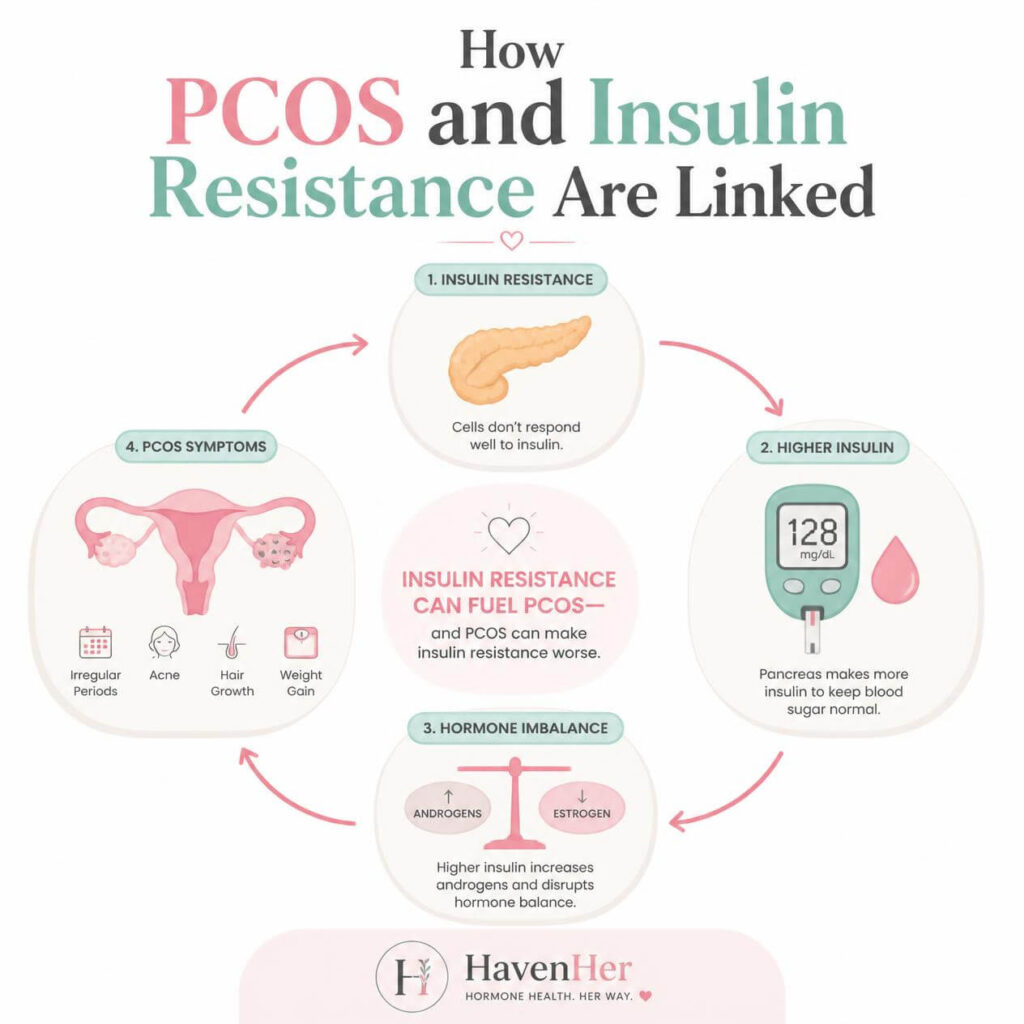
Insulin is a vital hormone produced by your pancreas. Its primary job is to act as a key, unlocking your body’s cells so they can absorb glucose (sugar) from your bloodstream and use it for energy. Understanding PCOS insulin resistance is the first step to reversing symptoms.
When you have insulin resistance, your cells become less responsive to this key. To compensate, your pancreas produces more insulin to keep blood sugar levels stable.
High circulating insulin levels do more than affect energy storage. In people with PCOS, excess insulin stimulates the ovaries to produce higher amounts of androgens (often referred to as male hormones, though present in everyone). This hormonal shift can trigger common PCOS symptoms, including:
- Irregular or absent menstrual cycles
- Acne and skin changes
- Unwanted hair growth (hirsutism) on the face or body
- Hair thinning on the scalp
- Fatigue and intense sugar cravings
Research suggests that managing insulin resistance is one of the most effective ways to support overall PCOS management and reproductive health. Research shows that 70-80% of women with PCOS have insulin resistance according to NCBI studies.
The CDC also recommends blood sugar balancing meals with protein and fiber to help manage symptoms and reduce cravings.
The Foundation of Blood Sugar Balance: Protein and Fiber
While many popular sources promote restrictive diets to manage PCOS, clinical evidence supports a much gentler, more sustainable approach: crowding in nutrient-dense foods that slow down glucose absorption.
When you eat carbohydrates on their own, your body breaks them down into glucose rapidly, causing a sharp blood sugar spike followed by an energy crash. This crash is what triggers cortisol release and subsequent cravings.
By systematically pairing carbohydrates with protein and dietary fiber, you build a metabolic buffer:
| Nutrient | How It Supports Insulin Sensitivity | Excellent Food Sources |
|---|---|---|
| Protein | Stimulates satiety hormones (like GLY-1 and PYY), maintains muscle mass, and slows down digestion. | Wild-caught salmon, organic poultry, tofu, tempeh, eggs, and Greek yogurt. |
| Fiber | Slows glucose absorption in the small intestine, supports gut microbiome diversity, and promotes stable bowel movements. | Chia seeds, flaxseeds, raspberries, black beans, lentils, broccoli, and avocados. |
How to Build a Blood Sugar-Balancing Plate
Instead of measuring every gram, focus on visual proportions:
- One-half of your plate: Non-starchy vegetables (spinach, cauliflower, peppers) for volume and fiber.
- One-quarter of your plate: Lean protein sources to support muscle and satiety.
- One-quarter of your plate: Complex, slow-burning carbohydrates (quinoa, sweet potato, brown rice).
- A drizzle of healthy fats (olive oil, avocado, pumpkin seeds) to assist with fat-soluble vitamin absorption.
Did You Know?
The order in which you eat your food can impact post-meal glucose spikes. Some clinical trials show that eating vegetables (fiber) and protein before complex carbohydrates can reduce overall insulin demand.
Simple Lifestyle Supports for Insulin Sensitivity
While nutrition is a primary pillar, your body’s sensitivity to insulin is also regulated by daily movement and rest patterns:
- Gentle Consistent Movement: Muscle contraction absorbs glucose from your blood without needing insulin. A 10-to-15 minute walk after meals is highly effective at reducing post-meal sugar spikes.
- Prioritize Restful Sleep: Even a single night of sleep deprivation can temporarily increase insulin resistance. Aim for 7 to 9 hours of quality rest per night.
- Stress Management: High levels of cortisol (the stress hormone) signal your liver to release stored glucose, raising baseline blood sugar levels. Incorporate brief breathwork, yoga, or journaling into your routine.
PCOS Insulin Resistance Diet: 3 Proven Nutrition Strategies
Managing PCOS insulin resistance doesn’t require perfection. It requires consistency with protein, fiber, and timing. Here are 3 strategies that actually work:
Strategy 1: The Protein-First Plate Method
Start every meal with 20-30g of protein. This signals satiety hormones and slows glucose absorption. Think eggs at breakfast, chicken at lunch, tofu at dinner.
Strategy 2: Fiber Crowding
Add 2 tbsp of chia or flaxseeds to one meal per day. Fiber feeds good gut bacteria and creates a gel in your gut that slows sugar spikes. Berries, lentils, and broccoli count too.
Strategy 3: Smart Carb Pairing
Never eat carbs alone. Pair fruit with yogurt, toast with eggs, or rice with beans. This PCOS insulin resistance diet trick cuts post-meal insulin by up to 40%.
7 Day PCOS Insulin Resistance Meal Plan Sample
Here’s 3 days to get you started. Repeat and rotate.
Day 1
Breakfast: Greek yogurt + berries + chia seeds
Lunch: Salmon bowl with quinoa + broccoli + avocado
Dinner: Chicken stir-fry with cauliflower rice
Day 2
Breakfast: Veg omelette + 1 slice sourdough + avocado
Lunch: Lentil salad with feta + olive oil
Dinner: Tofu + stir-fried peppers + brown rice
Day 3
Breakfast: Protein smoothie with spinach + almond butter
Lunch: Turkey lettuce wraps + side of raspberries
Dinner: Baked salmon + sweet potato + green beans

References & Scientific Guidelines
- The Endocrine Society Clinical Practice Guidelines: Recommended lifestyle interventions as first-line therapy for women with PCOS.
- International Evidence-Based Guideline for PCOS (2023): Highlights the importance of individualized nutritional planning that avoids food shaming or extreme calorie restriction.
- American Diabetes Association (ADA): Demonstrates the role of soluble fiber and high-quality protein in improving insulin sensitivity.
- A healthy day always starts with a pcos friendly breakfast.
Frequently Asked Questions
Can I cure my PCOS and insulin resistance completely?
There is currently no cure for PCOS, as it is a lifelong metabolic and genetic condition. However, symptoms can be managed exceptionally well. Through sustainable lifestyle changes, targeted nutrition, and appropriate medical support, you can significantly improve insulin sensitivity, restore regular cycles, and clear skin issues.
Do I have to stop eating all carbs if I have PCOS?
Absolutely not. Restricting carbohydrates completely is often unsustainable and can lead to elevated stress levels (which worsens insulin resistance). Instead, focus on carbohydrate quality and pairing. Choose whole-food, high-fiber carbs (like quinoa, oats, and berries) and pair them with a clean protein and healthy fat.
How long does it take to improve insulin sensitivity?
Some cellular changes happen almost immediately. For example, a single post-meal walk improves glucose uptake right away. However, noticeable systemic improvements in cravings, daily energy, and cycle regularity typically require 4 to 12 weeks of consistent, compassionate lifestyle adjustments.
Medically reviewed by Consultant Dr. Mehwish Saif, Certified Professional Gynecologist.
Medical Disclaimer: This information is for educational purposes only. Consult your healthcare provider before making diet changes.