
7-Day PCOS Meal Plan for Beginners: Eat to Balance Hormones
Waking up exhausted after eight hours of sleep, struggling with stubborn weight that refuses to budge, and dealing with unpredictable hormonal breakouts can make you feel like your own body is working against you. For millions of women living with Polycystic Ovary Syndrome (PCOS), these daily frustrations are all too familiar. Finding an effective, easy-to-follow pcos meal plan is often the first step toward regaining control, yet the sea of conflicting nutritional advice online can leave you feeling more overwhelmed than when you started.
The fundamental reason many mainstream diets fail women with PCOS is that they treat hormonal conditions like simple caloric mathematics. Standard weight-loss programs focus almost entirely on extreme calorie restriction, which can actually increase cortisol levels and worsen your hormonal imbalances. PCOS is not a lack of willpower; it is a complex endocrine disorder closely tied to insulin resistance and chronic low-grade inflammation. To heal, your body does not need deprivation—it needs targeted, nurturing nourishment that stabilizes blood sugar.
This practical, beginner-friendly 7-day guide is designed to take the guesswork out of hormone-balancing nutrition. Instead of asking you to hunt down exotic, expensive superfoods or spend hours in the kitchen, this plan utilizes accessible, budget-friendly ingredients. By focusing on whole, anti-inflammatory foods paired with high-quality proteins and dietary fibers, you can cultivate sustainable habits that support your body’s natural rhythm. Let us explore how you can eat satisfying, delicious meals while actively promoting hormonal harmony.
If you need recipe ideas, start with our 15 PCOS Breakfast Ideas for Weight Loss.
If you’re new to PCOS, read my guide on PCOS Symptoms Every Woman Should Know first. HavenHer Women’s Health Guides
Why This PCOS Meal Plan Works for Insulin Resistance
To effectively manage PCOS, your diet must address the root physiological drivers of the condition: insulin resistance and systemic inflammation. This nutrition guide is carefully structured to work with your biochemistry, not against it, through three primary evidence-based mechanisms:
Combats Insulin Resistance
According to the Office on Women’s Health, up to 70% of women with PCOS suffer from insulin resistance, where cells do not respond properly to insulin, leading to elevated blood glucose and excess androgen production. This meal plan pairs complex, low-glycemic carbohydrates with rich protein sources to prevent sharp glucose spikes and subsequent insulin crashes.
Reduces Systemic Inflammation
PCOS is characterized by chronic, low-grade systemic inflammation, which worsens insulin resistance and contributes to adrenal fatigue. Every day in this guide features foods rich in antioxidants and omega-3 fatty acids—such as leafy greens, berries, and healthy seeds—to soothe inflammation and promote cellular healing.
Optimizes Satiety Hormones
Restrictive diets often trigger hunger hormones like ghrelin, leading to intense cravings and binge-eating cycles. By maintaining a high-protein, high-fiber intake at every meal, this plan promotes the release of peptide YY and leptin, keeping you full, energized, and satisfied throughout the day.
PCOS Diet Rules Before We Start
Before diving into the meal schedule, establishing a few foundational habits will ensure your long-term success. These five practical guidelines will help you build a positive relationship with hormone-supportive eating.
1. Pair Every Carbohydrate with Protein or Fat
Never eat carbohydrates in isolation, as they digest quickly and cause rapid spikes in blood sugar. Combining your carbs with a quality source of protein, healthy fiber, or beneficial fats slows down digestion.
2. Focus on Crowding Out, Not Cutting Out
Instead of focusing on all the foods you “cannot” eat, concentrate on adding beneficial, nutrient-dense foods to your plate. Ensure your meals are packed with colorful vegetables, lean proteins, and anti-inflammatory spices.
3. Respect Consistent Meal Timing
Eating at regular intervals throughout the day prevents dramatic dips in blood sugar, which can trigger cortisol spikes and intense sugar cravings. Aim to consume a balanced meal or snack every three to four hours.
4. Choose Whole, Low-Glycemic Carbs
Swap refined grains like white bread and white rice for fiber-rich, whole-food alternatives. Foods like quinoa, steel-cut oats, wild rice, and sweet potatoes release energy slowly.
5. Hydrate Mindfully with Anti-Inflammatory Fluids
Dehydration can mimic hunger signals and exacerbate fatigue. Prioritize clean filtered water, and enrich your routine with spearmint tea, which studies suggest may help reduce free testosterone levels.
Your 7-Day PCOS Meal Plan
This professional weekly menu focuses on budget-friendly, high-protein, high-fiber, and anti-inflammatory ingredients. It is designed to minimize prep time while maximizing nutritional support.
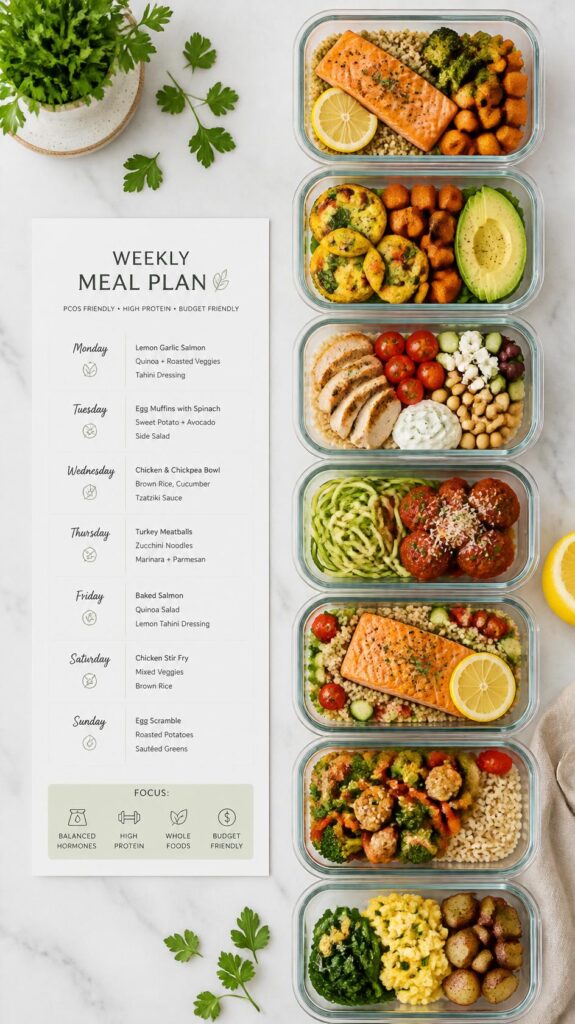
| Day | Breakfast | Snack | Lunch | Snack | Dinner |
|---|---|---|---|---|---|
| Day 1 | Chia berry pudding with pumpkin seeds | Sliced cucumber with 2 tbsp hummus | Quinoa salad with chickpeas, spinach, & olive oil | One hard-boiled egg with a pinch of black pepper | Baked lemon herb salmon with roasted asparagus |
| Day 2 | Two scrambled eggs with baby spinach | Handful of raw walnuts | Leftover quinoa chickpea salad from Day 1 | Celery sticks with 1 tbsp almond butter | Turkey and vegetable stir-fry with cauliflower rice |
| Day 3 | Greek yogurt with ground flaxseeds & berries | Half an avocado on seed crackers | Leftover turkey & veggie stir-fry | 10 baby carrots with 2 tbsp guacamole | Grilled chicken breast with roasted broccoli & quinoa |
| Day 4 | Spearmint green smoothie with protein powder | One apple with pumpkin seeds | Leftover grilled chicken, broccoli, & quinoa | Sliced bell peppers with 2 tbsp hummus | Lentil & vegetable soup with mixed greens |
| Day 5 | Three-egg omelet with mushrooms and spinach | Greek yogurt with cinnamon | Leftover lentil & vegetable soup | Handful of mixed almonds and walnuts | Baked cod with roasted Brussels sprouts & sweet potato |
| Day 6 | Steel-cut oats with almond milk and walnuts | One hard-boiled egg with cucumber | Quinoa bowl with canned tuna, spinach, & olive oil | Celery sticks with 1 tbsp peanut butter | Ground turkey lettuce wraps |
| Day 7 | Two scrambled eggs with smoked salmon & avocado | Blueberries with pumpkin seeds | Leftover turkey lettuce wraps with quinoa side | One cup of warm bone broth | Slow-cooker chicken breast with roasted root veggies |
Check out these top anti-inflammatory PCOS snacks for hormone balance.
For more quick morning options, try these 7 easy pcos breakfast ideas for weight loss.
Three PCOS-Friendly Recipes from the Plan
Recipe 1: Overnight Chia Seed & Berry Pudding
Prep Time: 5 minutes | Chill Time: 4 hours | Servings: 1
Ingredients: 3 tbsp chia seeds, 1 cup unsweetened almond milk, 1/2 tsp vanilla, 1/4 tsp cinnamon, 1/3 cup blueberries, 1 tbsp pumpkin seeds
Instructions: Combine chia seeds, almond milk, vanilla, and cinnamon in a jar. Stir, let sit 5 min, stir again. Refrigerate overnight. Top with berries and pumpkin seeds.
PCOS Tip: Pumpkin seeds are naturally rich in zinc, which supports progesterone production.
Recipe 2: Mediterranean Chickpea & Quinoa Salad
Prep Time: 10 minutes | Cooking Time: 15 minutes | Servings: 2
Ingredients: 1 cup cooked quinoa, 1 can chickpeas, 1 cup cucumber, 1 cup cherry tomatoes, 2 cups spinach, 1 tbsp olive oil, 1 tbsp lemon juice
Instructions: Combine all ingredients in a bowl. Drizzle with olive oil and lemon juice. Toss and serve.
PCOS Tip: Quinoa is a complete plant protein with a low glycemic index for stable energy.
Recipe 3: Sheet-Pan Lemon Herb Salmon & Asparagus
Prep Time: 10 minutes | Cooking Time: 15 minutes | Servings: 2
Ingredients: 2 salmon fillets, 1 bunch asparagus, 1 tbsp olive oil, 1 lemon, 2 garlic cloves, 1 tsp dill
Instructions: Preheat oven to 400°F. Place salmon and asparagus on baking sheet. Drizzle oil, add garlic, dill, salt, pepper. Top with lemon. Bake 12-15 min.
PCOS Tip: Wild-caught salmon is an incredible source of Vitamin D, essential for ovarian function.
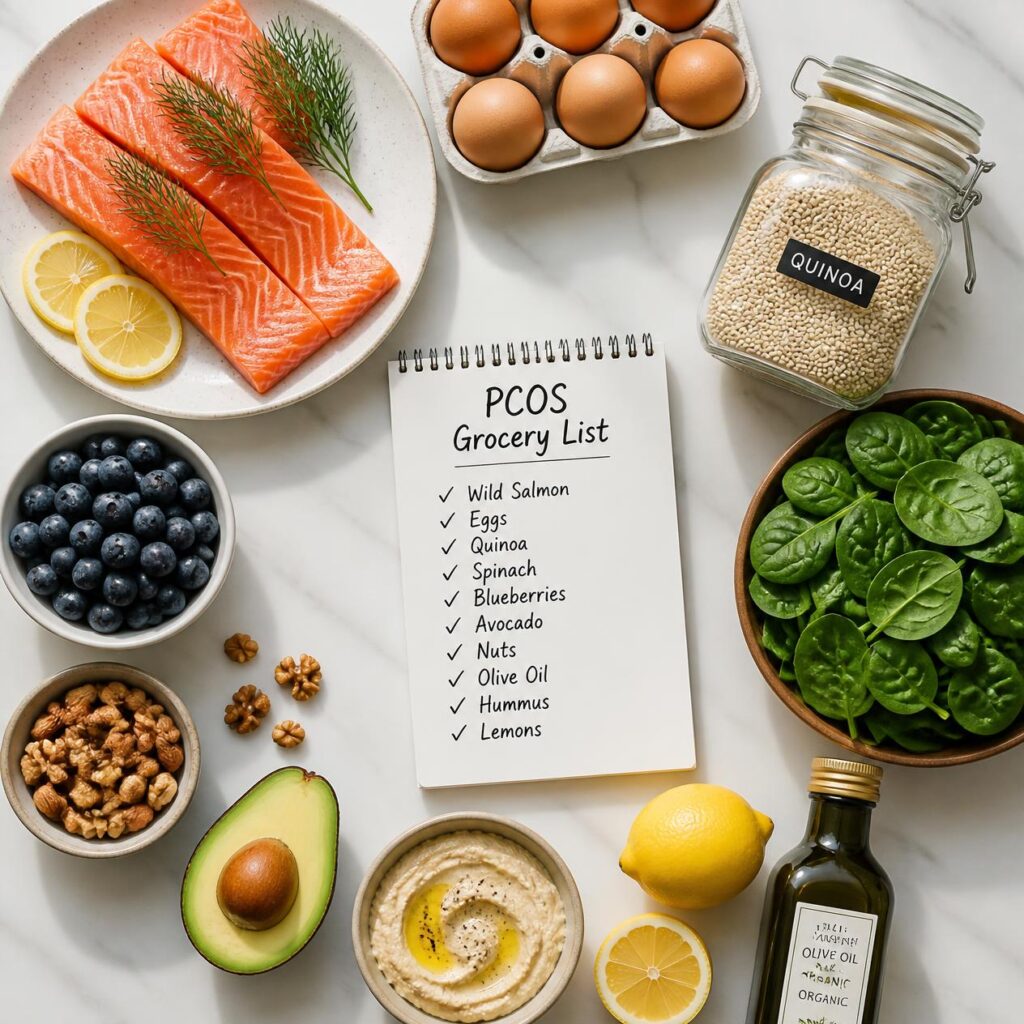
PCOS Grocery List for This Week
- Proteins: Wild-caught salmon, chicken breasts, ground turkey, canned tuna, organic eggs
- Vegetables: Baby spinach, broccoli, asparagus, mushrooms, Brussels sprouts, cucumbers, celery, bell peppers
- Fruits: Blueberries, raspberries, green apples, lemons
- Whole Grains: Quinoa, steel-cut oats, seed crackers
- Healthy Fats: Olive oil, avocados, hummus, walnuts, almonds, pumpkin seeds, flaxseeds
- Dairy: Greek yogurt, almond milk
- Pantry: Chickpeas, lentils, vanilla, cinnamon, spearmint tea
Can You Lose Weight on This Meal Plan?
Weight management with PCOS requires addressing insulin resistance, not just calories. This plan helps lower insulin levels through protein + fiber pairing. Add gentle exercise like walking or yoga, plus 7-8 hours of sleep to support cortisol balance.
Learn how to manage cortisol and stress for hormonal health for faster results.
According to a study on PubMed, spearmint tea may help reduce free testosterone in women with PCOS.
If you also have thyroid issues with PCOS, make sure you get your thyroid panel checked — here is how PCOS and thyroid are connected and what foods help both.
Frequently Asked Questions
What is the best breakfast for PCOS?
The absolute best breakfast for managing PCOS is one that is rich in high-quality protein, dietary fiber, and healthy, anti-inflammatory fats, while remaining low in refined sugars. Instead of starting your day with processed cereal, toast, or fruit juices—which spike your insulin and set off a day-long roller coaster of blood sugar crashes and intense cravings—opt for a savory egg scramble with spinach and avocado, or a seed-rich chia pudding. A protein-forward breakfast stabilizes your morning blood sugar, supports optimal thyroid function, regulates cortisol, and provides sustained energy that lasts until lunchtime.
Can I eat rice if I have PCOS?
Yes, you can absolutely enjoy rice when managing PCOS, but the key lies in the variety, portion size, and meal pairing. Refined white rice digests rapidly, leading to a quick surge in blood glucose and subsequent insulin spikes. To avoid this, swap white rice for wild rice, black rice, or brown rice, which retain their natural fiber and micronutrients. Additionally, keep your portion to about half a cup and always pair it with a generous serving of lean protein and non-starchy vegetables. This combination slows digestion and keeps your glucose curve flat and stable.
How long does it take for a PCOS diet to work?
While every individual body possesses a unique metabolic and hormonal fingerprint, many women begin noticing positive changes in their energy levels, digestion, and mental clarity within the first two to three weeks of consistent hormone-supportive eating. Structural changes, such as more regular menstrual cycles, reduced cystic acne breakouts, and sustainable shifts in body composition, typically take three to six months to fully manifest. Consistency is far more powerful than perfection; giving your endocrine system adequate time to downregulate chronic inflammation is the key to lasting hormonal healing.
What foods should I completely avoid with PCOS?
Rather than practicing strict elimination, you should aim to minimize foods that actively drive insulin resistance and systemic inflammation. This includes ultra-processed foods, refined sugar, sodas, white flour, and trans fats found in deep-fried foods. These foods disrupt your gut microbiome, trigger severe blood sugar spikes, and aggravate PCOS symptoms. Additionally, reduce your intake of excessive caffeine and alcohol, which can tax your liver and elevate your stress hormones. Focus on replacing these choices with nutrient-dense, anti-inflammatory whole-food alternatives that truly feed and heal your cells.
Final Thoughts
Navigating PCOS can feel daunting, but your kitchen is one of the most powerful tools you have for healing. Focus on making one small, consistent change today. Every balanced choice is a step toward reducing inflammation and reclaiming your vitality.
Medically reviewed by Consultant Dr. Mehwish Saif, Certified Professional Gynecologist.
Medical Disclaimer: This information is for educational purposes only. Consult your healthcare provider before making diet changes.