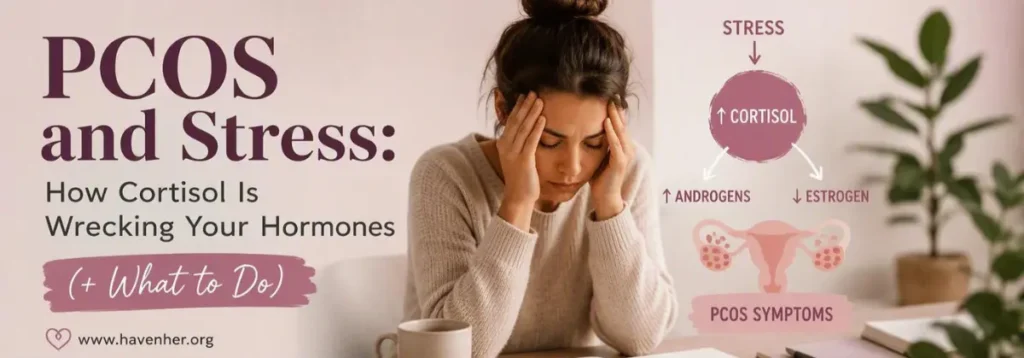

PCOS and Stress: How Cortisol Is Wrecking Your Hormones (+ What to Do)
Key Takeaways
- Chronic stress activates the HPA axis, raising cortisol — and in women with PCOS and stress, elevated cortisol directly worsens insulin resistance, increases androgen production, disrupts ovulation, and drives abdominal fat storage.
- Women with PCOS and stress are significantly more likely to experience anxiety and depression than women without the condition — a 2024 meta-analysis found pooled rates of depressive disorders at 34.8% and anxiety symptoms on validated scales reaching up to 69%.
- Adrenal PCOS is a specific subtype in which the adrenal glands are the primary source of excess androgens — and it is directly stress-sensitive in a way that other PCOS subtypes are not.
- Florida’s extreme summer heat is a documented physiological stressor that measurably elevates HPA axis reactivity and cortisol output — a clinically relevant reality for women managing PCOS in the Tampa Bay area.
- Stress reduction is not a soft lifestyle suggestion. It is a direct hormonal intervention for PCOS with published evidence for improving insulin sensitivity, androgen levels, and cycle regularity.
- Mindfulness, breathwork, yoga, sleep optimisation, and adapted exercise are the highest-evidence approaches. Ashwagandha and magnesium glycinate have supplementary evidence for supporting HPA regulation.
- You cannot out-eat or out-exercise a chronically activated stress response. Cortisol is the missing piece for many women whose PCOS diet is not working.
Introduction
Every woman with PCOS and stress who has followed a clean diet for months and still cannot shift weight, regulate her cycle, or clear her skin deserves an honest answer about why. Frequently, the answer involves cortisol.
Stress is one of the most biologically active forces in PCOS management — and one of the most consistently overlooked. It is easy to focus on what you eat and how you exercise while the chronic background hum of a demanding life quietly undermines everything you are trying to build. Cortisol does not simply make you feel tense or irritable. In the context of PCOS, it actively worsens insulin resistance, amplifies androgen production, suppresses the hormones that trigger ovulation, and drives fat to deposit precisely where women with PCOS least want it — the abdomen.
Research published in Frontiers in Endocrinology (2025) confirmed the pathway directly: psychological stress increases cortisol through the hypothalamic-pituitary-adrenal (HPA) axis, which leads to insulin resistance and increased androgen secretion, further worsening PCOS symptoms.
For women in the Tampa Bay area, there is an additional layer. Florida’s summer heat — which in St. Petersburg regularly exceeds 90°F with high humidity from May through October — is a documented physiological stressor. Research published in 2025 found that higher ambient temperatures measurably amplify cortisol reactivity to psycho social stress. If you live in Florida and are managing PCOS and stress, you are doing so in a climate that adds to your body’s baseline stress load in ways most health guides never acknowledge.
This article explains exactly how the stress-PCOS connection works, what it means for your specific symptoms, and what the evidence says you can do about it.
If you have been following a structured PCOS nutrition approach without the progress you expected, our guide on Why Am I Not Losing Weight on a PCOS Diet? covers cortisol as one of seven hidden reasons. This article gives that piece the clinical depth it deserves.
The PCOS-Stress Connection: Why Your Body Reacts This Way
PCOS is, at its metabolic core, a condition of hormonal disregulation but hormones do not exist in isolation. Every system in your body is in constant communication, and the stress response system sits at the intersection of the reproductive, metabolic, and immune systems simultaneously.
Women with PCOS have been shown to have significantly higher baseline cortisol levels compared to healthy controls, with research consistently demonstrating hyperactivation of the HPA axis. Critically, this is not simply a consequence of the psychological burden of managing a chronic condition, though that burden is very real. It reflects a physiological feature of the condition itself — one that creates a self-reinforcing cycle.
The cycle works like this: PCOS symptoms — irregular periods, unwanted hair growth, acne, weight gain, difficulty conceiving — create genuine psychological distress. That distress elevates cortisol. Elevated cortisol worsens insulin resistance and drives adrenal androgen production. Worsened androgens intensify the symptoms that caused the distress. And the cycle continues, often for years, without anyone identifying stress as a clinical variable that needs direct management.
If you are facing PCOS and stress you can view compulsory details on how to get pregnant with PCOS and stress
🔬 Research Summary A 2025 paper in Frontiers in Endocrinology on PCOS pathogenesis confirmed that psychological stress increases cortisol through HPA axis activation, leading to increased insulin resistance and androgen secretion — directly worsening PCOS symptoms. The adrenal glands, which produce cortisol, also produce the androgen precursor DHEA-S, meaning chronic stress simultaneously drives two of the most damaging processes in PCOS through a single gland.
The HPA Axis: Your Stress Command Centre
The hypothalamic-pituitary-adrenal (HPA) axis is the body’s central stress regulation system. Understanding how it operates explains why chronic stress has such a far-reaching impact on PCOS.
When your brain perceives any stressor — a work deadline, financial pressure, a difficult relationship, extreme heat, or the persistent emotional weight of living in a body that feels unpredictable — the hypothalamus releases corticotropin-releasing hormone (CRH). CRH signals the pituitary gland to release adrenocorticotropic hormone (ACTH). ACTH travels to the adrenal glands and instructs them to produce cortisol.
In short, controlled bursts, this is essential. Cortisol mobilises glucose for energy, sharpens focus, and prepares the body to respond to a real challenge. The problem arises when the stressor is not a single, passing event but a continuous background pressure — a job that drains you, financial worry that does not resolve, a body you are frustrated with, a condition that makes daily decisions feel loaded.
When stress is sustained, the HPA axis stays activated. Early on, this produces chronically elevated cortisol. Over time, prolonged activation can shift toward a dysregulated response — sometimes blunted, sometimes erratic — associated with fatigue, mood disorders, and disrupted immune function. Both patterns are problematic, and both are relevant to PCOS.
💡 Expert Tip The HPA axis cannot distinguish between a genuine physical threat and the anxiety of a difficult week at work. It responds to perceived stress with the same hormonal output regardless. This is why lifestyle stressors — financial pressure, relationship strain, body image distress, the emotional exhaustion of tracking symptoms and cycles — are as physiologically relevant to PCOS management as your diet.
What Cortisol Actually Does to PCOS
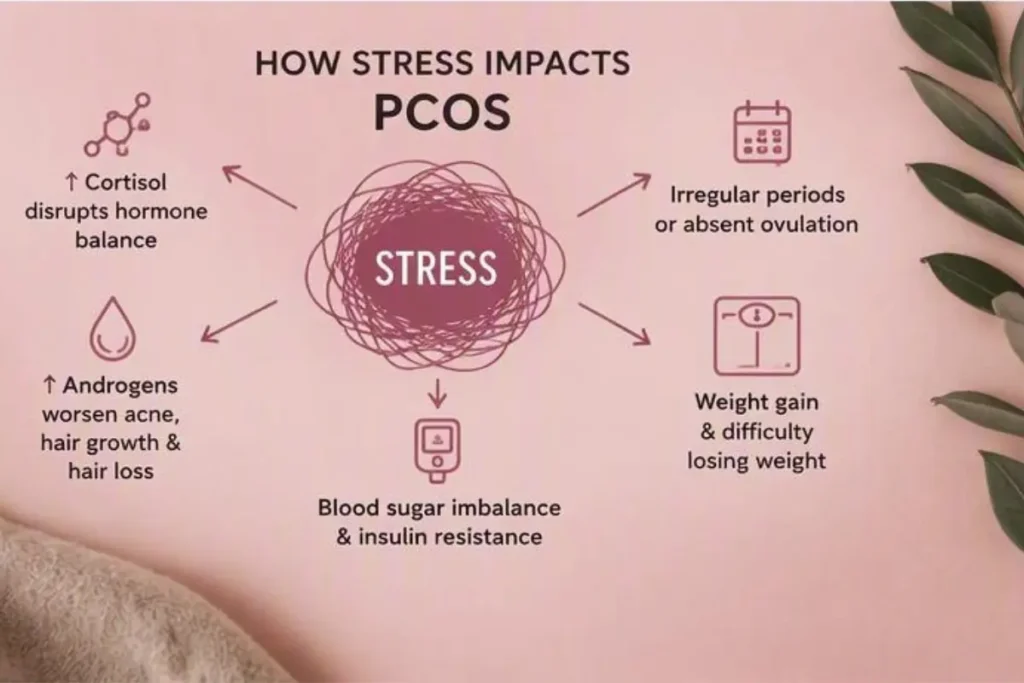
Understanding the specific mechanisms through which cortisol worsens PCOS is more useful than knowing simply that “stress is bad.” Each of these pathways has practical implications for how you approach your management.
1. Cortisol Worsens Insulin Resistance Directly
Cortisol raises blood glucose by stimulating the liver to produce and release glucose — a mechanism designed to provide energy during a threat. For a woman with PCOS and stress who already has compromised insulin signalling, this additional glucose surge demands more insulin in response. More insulin means more fat storage, more androgen production by the ovaries, and a more hostile metabolic environment overall.
This is why the scale can stall or even move in the wrong direction during periods of high psychological stress, even when you have not changed what you eat.
2. Cortisol Drives Adrenal Androgen Production
The adrenal glands produce both cortisol and androgen precursors — specifically DHEA and DHEA-S — from the same adrenal cortex. When ACTH stimulates the adrenal glands to produce more cortisol under chronic stress, androgen output increases alongside it. Research consistently shows that women with PCOS have elevated adrenal androgen levels compared to healthy controls, and that this excess is closely tied to HPA hyperactivity.
The practical consequence is that chronic stress directly amplifies the androgen excess that drives acne, facial and body hair, and scalp hair thinning. Managing stress is, in this sense, a genuine anti-androgen strategy.
3. Cortisol Suppresses Ovulation
Elevated cortisol can suppress LH (luteinizing hormone) pulsatility — the rhythmic release of LH from the pituitary that is essential for triggering ovulation. When LH pulses are disrupted, ovulation becomes irregular or absent. For women with PCOS and stress, whose LH regulation is already disrupted, additional cortisol-driven suppression compounds the problem significantly.
Research has consistently demonstrated that chronic psychological stress is associated with menstrual cycle irregularity — specifically irregular or abnormal menstrual flow — through this mechanism. If your cycles are inconsistent, chronic stress is a clinical factor worth evaluating.
4. Cortisol Directs Fat to the Abdomen
Abdominal fat cells have a higher density of cortisol receptors than fat cells elsewhere in the body. When cortisol is chronically elevated, it preferentially drives fat storage in the abdominal region — which is also the location most associated with cardiovascular risk and metabolic dysfunction in PCOS. A published NIH-funded study on normal-weight women with PCOS found elevated adrenal cortisol levels associated with greater abdominal adipose accumulation, even in women who were not clinically overweight.
5. Cortisol Disrupts Sleep, Which Worsens Everything Else
Cortisol follows a diurnal rhythm — it should be highest in the morning to support waking, then decline steadily across the day. Chronic stress disrupts this rhythm, often keeping cortisol elevated into the evening. High evening cortisol suppresses melatonin, delays sleep onset, and fragments sleep architecture. Poor sleep then independently worsens insulin resistance, raises ghrelin (hunger hormone), and lowers leptin (fullness hormone) — driving the exact conditions that make PCOS weight management hardest.
Adrenal PCOS: When Stress Is the Primary Driver
What It Is
Adrenal PCOS is one of the four recognised phenotypes of polycystic ovary syndrome. Unlike the more common ovarian-driven phenotypes, adrenal PCOS is characterised by elevated DHEA-S (a marker of adrenal androgen output) rather than — or in addition to — elevated testosterone from the ovaries. In adrenal PCOS, it is the adrenal glands, directly under HPA axis control, that are the primary source of excess androgens.
This distinction matters enormously for management. Standard approaches targeting ovarian androgen production may produce limited results in adrenal PCOS if the HPA axis dysregulation driving the adrenal overactivity is never addressed.
How to Know If This Might Apply to You
A blood test measuring DHEA-S levels — separate from the standard testosterone measurement — can indicate adrenal androgen excess. Elevated DHEA-S alongside PCOS symptoms points toward adrenal involvement. Clinically, women with adrenal PCOS often notice that their symptoms worsen markedly during or after periods of sustained high stress and improve more than average during lower-stress periods.
❓ Did You Know? Not all PCOS is the same phenotype. The Rotterdam Criteria recognise four distinct PCOS phenotypes, ranging from classic (irregular cycles + hyperandrogenism + polycystic ovaries) to milder presentations. Women with adrenal PCOS may have normal LH levels and testosterone but elevated DHEA-S — and they frequently go unrecognised because standard PCOS bloodwork does not always include a DHEA-S measurement. If you have PCOS and significant stress-reactive symptoms, ask Dr. Mehwish Saif or your clinician to check your DHEA-S specifically.
The Mental Health Burden: Anxiety and Depression in PCOS
The relationship between PCOS and psychological wellbeing is bidirectional and clinically significant. Women with PCOS do not experience anxiety and depression simply because the condition is frustrating to live with — though it is. There are hormonal and neurobiological mechanisms that directly elevate mental health risk.
Elevated androgens, insulin resistance, and disrupted sleep all influence neurotransmitter function, including serotonin and dopamine pathways. The inflammatory cytokines elevated in PCOS cross the blood-brain barrier and contribute directly to mood dysregulation.
The prevalence data is striking. A meta-analysis published in Archives of Women’s Mental Health (2024), reviewing ten systematic reviews, found:
- Pooled prevalence of depressive disorders in women with PCOS: 34.8%
- Anxiety symptoms measured by the Hamilton Anxiety Scale: 69.4%
- Anxiety symptoms measured by the Hospital Anxiety and Depression Scale: 41.5%
A 2025 systematic review and meta-analysis published in Frontiers in Global Women’s Health, covering 40 studies and more than 3,860 records, found pooled depression prevalence of 51% and anxiety prevalence of 45% in women with PCOS — with the highest rates in women aged 20–25.
These are not incidental findings. They describe the lived experience of a large proportion of women with this condition — and they matter for cortisol, because anxiety and depression are themselves HPA axis stressors that maintain elevated cortisol and sustain the hormonal disruption.
💡 Expert Tip If you are managing PCOS and also experiencing persistent low mood, anxiety, overwhelm, or emotional exhaustion, these are not personality traits or signs of weakness — they are clinically relevant symptoms that deserve the same attention as irregular periods or insulin resistance. Addressing mental health is part of managing PCOS biology, not separate from it. Dr. Mehwish Saif’s practice in St. Petersburg evaluates the full picture of women’s hormonal and emotional health. Contact us through the link below.
The Florida Factor: Heat, Humidity, and Your Cortisol
This section is specific to women in the Tampa Bay area and across Florida — and it matters more than most PCOS guides acknowledge.
Florida’s climate from May through October is characterised by temperatures that regularly exceed 90°F with high humidity, creating heat index values well above 100°F on many days. The physiological consequences of sustained heat exposure are well established.
Heat directly activates the HPA axis. Research published in PLOS ONE found that exercising in a hot environment (40°C) produced significantly greater cortisol elevation than the same exercise at normal temperature (22°C). A 2025 study reported in the American Journal of Managed Care confirmed that higher ambient room temperature amplifies reactivity in the HPA axis — meaning the same psychological stressor produces a greater cortisol response in a hotter environment.
For a woman with PCOS in St. Petersburg from June through September, this creates a compounding effect. The baseline physiological stress of managing PCOS is already associated with HPA hyperactivity. Add Florida’s heat as an additional HPA activator, and the cortisol burden on an already-sensitive hormonal system increases in a way that is rarely factored into standard PCOS management advice.
Practical implications for Florida women:
- Reschedule outdoor exercise. Walking, running, or cycling between 6am and 8am — before temperatures rise — produces a fundamentally different cortisol response than the same activity at midday. For PCOS specifically, where cortisol management is metabolically relevant, timing outdoor activity is not just a comfort issue. It is a hormonal one.
- Prioritise indoor strength training during summer months. An air-conditioned gym session of 40–50 minutes of resistance training produces a cortisol profile far more favourable for PCOS than the same duration of outdoor cardio in the Florida heat. See our discussion of strength training and PCOS in Why Am I Not Losing Weight on a PCOS Diet?
- Treat heat avoidance as medical, not luxury. Staying in air-conditioned environments during peak heat hours (10am–4pm) is a legitimate component of cortisol management for women with PCOS in Florida’s climate.
- Stay consistently hydrated. Dehydration is an independent physiological stressor that activates the HPA axis. In Florida’s heat, fluid losses are significantly higher than in cooler climates. Aim for 2.5–3 litres of water per day from May through October, and more if you are exercising outdoors.
💡 Expert Tip Spearmint tea brewed at full temperature, then chilled and served over ice, is an ideal Florida-friendly drink for PCOS management. It provides anti-androgen phytochemicals through rosmarinic acid, supports hydration, and replaces the cortisol-elevating caffeine hit of iced coffee. Brew a litre batch in the morning and keep it refrigerated. For more on spearmint tea evidence, see our PCOS Supplements Guide.
Signs Your Cortisol May Be Too High
High cortisol does not always look like what people expect. It is not just feeling “stressed” — many women with chronically elevated cortisol describe themselves as functioning, managing, and getting things done while quietly running on empty beneath the surface.
Signs that cortisol may be a significant factor in your PCOS include:
- Persistent abdominal fat despite a calorie-controlled diet — cortisol preferentially deposits fat in the abdomen via cortisol-receptor-dense adipose cells
- Intense sugar or carbohydrate cravings in the afternoon or evening — cortisol drives the brain to seek high-glucose foods as a refuelling response
- Waking between 2am and 4am regularly — cortisol spikes in the early morning; a disrupted rhythm can cause premature waking at this point in the diurnal cycle
- Feeling “wired but tired” — alert and restless but physically exhausted; a classic HPA dysregulation pattern
- PCOS symptoms that worsen markedly during stressful life periods — cycle disruption, acne flares, hair loss episodes coinciding with high-stress phases
- Difficulty recovering from exercise — chronic cortisol impairs muscle repair and extends recovery time
- Persistent low mood, anxiety, or emotional flatness — HPA dysregulation directly affects mood-regulating neurotransmitter systems
- Skin that is slower to heal or more prone to inflammation — cortisol has immunosuppressive effects that impair skin barrier function
If you recognise several of these patterns, cortisol regulation deserves specific attention as part of your PCOS management — not as a bonus or afterthought.
Evidence-Based Strategies to Lower Cortisol With PCOS
1. Mindfulness-Based Stress Reduction (MBSR)
Mindfulness-based stress reduction is among the most thoroughly studied non-pharmacological interventions for HPA axis regulation. A completed randomised controlled trial (NCT06665789, published 2025) evaluated MBSR specifically in women with PCOS and found statistically significant reductions in stress markers and improvements in metabolic parameters compared to control.
Mindfulness does not require a specific app, retreat, or dedicated hour. Research shows that even ten minutes of formal, consistent practice — guided breathing, body scan, or present-moment attention — produces measurable parasympathetic activation that lowers acute cortisol and, over weeks, begins to recalibrate baseline HPA reactivity.
Starting point: Ten minutes of diaphragmatic breathing each morning before checking your phone. Inhale for four counts, hold for four, exhale for six. The extended exhale is what activates the parasympathetic response.
2. Yoga With Specific Evidence in PCOS
Yoga has been evaluated directly in women with PCOS, with results that go beyond what might be expected from general relaxation. U.S. studies on mind-body practices in PCOS have found that yoga reduces hyperandrogenism regardless of BMI or age — meaning it is producing hormonal effects beyond cortisol alone, likely through combined HPA modulation and improved insulin sensitivity.
The evidence is strongest for consistent yoga practice (three or more sessions per week) over at least eight weeks. High-intensity hot yoga classes in Florida’s summer heat defeat the cortisol-reduction purpose — opt for yin, restorative, or gentle flow yoga, ideally in an air-conditioned studio.
3. Recalibrate Your Exercise Type
This is one of the most counterintuitive but well-supported adjustments for women with PCOS and elevated cortisol. Prolonged high-intensity cardiovascular exercise — more than 45 minutes at high effort — elevates cortisol significantly. A comparative exercise study in 200 obese women with PCOS found that the cardio-only group experienced the highest rates of fatigue and menstrual irregularity, with researchers attributing this partly to elevated cortisol from excessive high-intensity work.
The better approach for PCOS:
- Two to three resistance training sessions of 40–50 minutes weekly
- Two sessions of Zone 2 cardio (a pace comfortable enough to hold a conversation) lasting 30–40 minutes
- Morning sessions scheduled before Florida heat builds
Resistance training improves insulin sensitivity through glucose uptake in muscle tissue independently of insulin — and does so without the cortisol penalty of prolonged high-intensity cardio.
4. Prioritise Sleep Consistency Over Sleep Duration
Going to bed and waking at the same time daily — including weekends — stabilises the cortisol awakening response, which is the healthy morning cortisol peak that supports energy and focus. Irregular sleep schedules disrupt this rhythm in ways that have downstream effects on insulin sensitivity and androgen regulation.
Research has established significant associations between PCOS, sleep disturbance, and HPA axis dysregulation. Women with PCOS have disproportionately high rates of obstructive sleep apnea (estimates range from 17% to 75% of women with PCOS), which is both a consequence and a cause of elevated cortisol. If you snore, wake unrefreshed, or experience regular night waking, requesting a sleep assessment from your healthcare provider is a clinically relevant step.
5. Protect the Evening Cortisol Decline
Cortisol should drop significantly in the hours before sleep. Activities that prevent this decline — screens close to bedtime, vigorous late-night exercise, emotionally intense conversations or news consumption late in the evening, or large meals within two hours of sleep — all keep cortisol elevated and undermine sleep quality.
Create a consistent 60-minute wind-down routine. Dim lighting, no screens, warm shower or bath (the cooling after a warm bath accelerates melatonin production), light reading or stretching. This is not luxury — it is cortisol management.
6. Do Not Under-eat
Severe calorie restriction is itself a physiological stressor that activates the HPA axis and raises cortisol. This is one of the most common hidden reasons women with PCOS do not lose weight on restrictive diets — the restriction itself compounds the cortisol problem. Sustainable, moderate calorie reduction paired with adequate protein is supported by the evidence. Chronic under-eating is not. For practical guidance on structuring PCOS nutrition without creating this problem, our 7-Day PCOS Meal Plan for Beginners provides a balanced framework.
Supplements That Support the Stress Response
Ashwagandha (Withania somnifera)
Ashwagandha is an adaptogen — a substance that helps the body modulate its response to stress — with more published evidence behind it than almost any other botanical for HPA regulation. Its bioactive compounds, called withanolides, have been shown to reduce serum cortisol, improve stress resilience, and support sleep quality.
A double-blind, randomised controlled trial found that 200 mg of ashwagandha extract twice daily for 12 weeks significantly reduced perceived stress and fatigue while improving hormonal markers. In women with PCOS specifically, five months of ashwagandha use has been associated with reductions in testosterone in published studies.
Caution: Ashwagandha may interact with thyroid medications and should not be used in pregnancy. Always discuss with your doctor before starting.
Magnesium Glycinate
Magnesium is involved in over 300 enzymatic reactions in the body, including those that govern cortisol production and HPA axis regulation. Women with PCOS have measurably lower magnesium levels than age-matched controls — a depletion worsened by sweat losses in Florida’s heat and by stress itself (cortisol increases urinary magnesium excretion).
Magnesium glycinate at 200–400 mg in the evening supports sleep quality, reduces evening cortisol, and helps calm the nervous system. It is among the safest and most broadly useful supplements for PCOS. For more detail on the evidence, see our PCOS Supplements Guide.
Omega-3 Fatty Acids
Beyond their anti-inflammatory and lipid-lowering benefits in PCOS, omega-3 fatty acids have evidence for modulating the cortisol response. EPA and DHA appear to reduce HPA reactivity to acute stressors in clinical studies. A daily dose of 1–3 grams combined EPA and DHA with meals is the studied range.
⚠️ Common MistakeMistake: Treating stress management as something to add once diet and exercise are “sorted.” Better approach: Stress regulation is not the final layer — it is a foundational layer that determines how effectively every other PCOS intervention works. A woman eating a perfect PCOS diet under chronic HPA stress will achieve a fraction of the metabolic improvement of a woman eating the same diet with a well-regulated stress response. Address both together from the start.
What to Eat to Support Cortisol Regulation
Diet directly influences cortisol — both in terms of what you eat and when. These principles layer onto the PCOS nutrition foundations covered in our PCOS Insulin Resistance Diet Guide.

Eat Breakfast Within 90 Minutes of Waking
The cortisol awakening response peaks in the first 30–45 minutes after waking. Eating a protein-rich breakfast during this window supports blood glucose stability throughout the cortisol peak, preventing the reactive glucose dip that triggers mid-morning cravings and second cortisol spikes. Skipping breakfast or eating late is a missed opportunity to work with your cortisol rhythm rather than against it. See our PCOS Breakfast Ideas for high-protein morning options.
Prioritise Magnesium-Rich Foods
Dark leafy greens (spinach, kale, Swiss chard), pumpkin seeds, avocado, almonds, black beans, and dark chocolate (in moderation) are among the richest dietary sources of magnesium. Incorporating these consistently supports the enzymatic processes that regulate cortisol metabolism.
Reduce Caffeine After Midday
Caffeine stimulates cortisol release and has a half-life of approximately five to six hours. A coffee at 2pm can still be influencing your cortisol and melatonin at 10pm. Transitioning to herbal teas — spearmint, chamomile, lemon balm — after lunch supports the natural evening cortisol decline that is essential for sleep quality.
Eat Enough Carbohydrates (The Right Ones)
Severe carbohydrate restriction can elevate cortisol. Low-glycaemic carbohydrates — sweet potato, oats, quinoa, lentils, legumes — support serotonin production (which competes with cortisol at the level of the HPA axis) and provide the glucose the brain needs to feel safe and satiated. The goal is carbohydrate quality and pairing, not elimination. Our PCOS Grocery List covers the best low-GI carbohydrate sources in detail.
Quick Reference Table 1: How Cortisol Disrupts PCOS
| Mechanism | What Happens | PCOS Consequence |
|---|---|---|
| HPA axis activation | Hypothalamus releases CRH → pituitary releases ACTH → adrenals produce cortisol | Sustained androgen and cortisol output from adrenal glands |
| Blood glucose elevation | Cortisol triggers hepatic glucose release, demands more insulin | Worsened insulin resistance, increased ovarian androgen production |
| Adrenal androgen surge | ACTH stimulates adrenal DHEA-S and androstenedione alongside cortisol | Increased testosterone, worsened acne, hirsutism, hair thinning |
| LH suppression | Cortisol disrupts gonadotropin-releasing hormone pulsatility | Irregular or absent ovulation, cycle irregularity |
| Abdominal fat deposition | Cortisol receptor-dense abdominal adipose cells store fat preferentially | Centralised weight gain resistant to diet and exercise |
| Sleep disruption | Elevated evening cortisol suppresses melatonin, fragments sleep | Poor sleep worsens insulin resistance, ghrelin, and leptin — all PCOS drivers |
Quick Reference Table 2: Stress Management Strategies — Evidence at a Glance
| Strategy | Evidence in PCOS | How Much / How Often | Time to Effect |
|---|---|---|---|
| Mindfulness / MBSR | RCT evidence — reduces stress markers and metabolic disruption in PCOS | 10–20 minutes daily | 4–8 weeks |
| Yoga (gentle / restorative) | Reduces hyperandrogenism regardless of BMI in PCOS studies | 3 sessions/week, 45–60 min | 8–12 weeks |
| Resistance training | Improves insulin sensitivity and produces favourable cortisol profile vs. cardio | 2–3 sessions/week, 40–50 min | 4–8 weeks |
| Consistent sleep schedule | Stabilises cortisol awakening response, supports hormonal rhythm | Same bedtime/wake time daily | 2–4 weeks |
| Diaphragmatic breathwork | Activates parasympathetic response, acutely lowers cortisol | 5–10 minutes, 2x daily | Immediate + cumulative |
| Ashwagandha | RCT evidence — reduces serum cortisol up to 30% and perceived stress | 200–300 mg extract twice daily | 8–12 weeks |
| Magnesium glycinate | Supports cortisol metabolism and sleep quality; depleted in PCOS and by stress | 200–400 mg in the evening | 4–6 weeks |
Frequently Asked Questions
Can stress alone cause PCOS?
Stress does not cause PCOS in women who do not have the underlying hormonal and genetic predisposition. However, chronic stress can create a hormonal environment that mimics several PCOS features — irregular cycles, elevated androgens, insulin resistance — in women without a diagnosis. In women who already have PCOS, chronic stress significantly amplifies the severity of symptoms and makes the condition much harder to manage. There is also a recognised subtype called adrenal PCOS in which elevated adrenal androgen production, directly stress-sensitive, is the primary driver.
How do I know if I have adrenal PCOS?
Adrenal PCOS is identified through bloodwork — specifically elevated DHEA-S levels alongside standard PCOS markers. Standard PCOS testing does not always include DHEA-S; ask your doctor specifically. Signs that adrenal involvement may be significant include symptoms that worsen markedly during stressful periods, elevated DHEA-S on any prior bloodwork, and responses to stress management interventions that produce unusually clear hormonal improvements.
What is the fastest way to lower cortisol for PCOS?
The fastest acute cortisol reduction comes from parasympathetic activation — diaphragmatic breathing with an extended exhale (four counts in, six out) produces measurable cortisol reduction within minutes. For sustained, ongoing cortisol regulation, the combination of consistent sleep schedule, gentle yoga, morning exercise timing, and morning protein intake produces the most reliable results within four to eight weeks. There is no shortcut that bypasses the need for lifestyle recalibration.
Does coffee make PCOS worse through cortisol?
Caffeine stimulates cortisol release — particularly if consumed on an empty stomach in the morning before eating. For women with PCOS, consuming coffee before breakfast (especially first thing upon waking) can amplify the cortisol awakening response in a way that sets up blood glucose instability for the rest of the day. Transitioning to having coffee after a protein-rich breakfast, limiting intake after midday, and reducing to one to two cups daily are practical modifications that many women with PCOS find improves symptoms over several weeks.
Is anxiety a symptom of PCOS or a separate condition?
Both. Anxiety in women with PCOS is partly driven by the same hormonal mechanisms that drive other PCOS symptoms — androgen excess, HPA hyperactivity, insulin-related neurochemical disruption — meaning it is biologically connected to the condition. At the same time, anxiety as a separate clinical diagnosis can co-exist with PCOS and warrants its own evaluation and support. A 2024 meta-analysis confirmed anxiety prevalence rates in PCOS of up to 69% on validated scales. This is not a coincidence or an attitude — it is a neuroendocrine reality that deserves clinical attention.
Can managing stress improve my periods?
Yes, in many cases. Cortisol suppresses the gonadotropin-releasing hormone pulse that drives the LH surge needed for ovulation. When chronic stress is reduced and cortisol is recalibrated, LH pulsatility can improve, and ovulation — and therefore menstrual regularity — can recover. This is particularly evident in women with adrenal PCOS or in women whose cycle disruptions correlate closely with high-stress life periods. Stress management is a meaningful (though rarely sufficient on its own) component of improving cycle regularity.
Will yoga actually help with PCOS hormones or is it just good for general wellness?
The evidence for yoga in PCOS goes beyond general wellness. Published studies in PCOS populations specifically have found that yoga practice reduces hyperandrogenism — measurably lowering testosterone levels — regardless of BMI or age. The mechanism appears to involve both HPA modulation and improvements in insulin sensitivity. Three sessions per week over eight weeks is the studied protocol. Restorative and yin yoga styles are preferable for cortisol management over high-intensity hot yoga formats.
I live in Florida and exercise outdoors in the summer. Is this making my PCOS worse?
It may be contributing. Exercise in high-heat environments produces significantly greater cortisol elevation than the same exercise in cooler conditions. For women with PCOS and elevated baseline HPA reactivity, this additional cortisol burden can compound existing hormonal disruption. Shifting outdoor exercise to early morning before 8am, transitioning to indoor air-conditioned strength training during summer months, and staying consistently hydrated are practical adaptations that reduce this heat-driven cortisol load while maintaining fitness.
Can I take ashwagandha if I am trying to conceive?
No. Ashwagandha should not be used during pregnancy or when actively trying to conceive, as its effects on fetal development are not established and it has been associated with potential uterine-stimulating effects. If you are trying to conceive and managing stress-related PCOS symptoms, discuss non-supplement approaches — breathwork, yoga, sleep optimisation, therapy — with Dr. Mehwish Saif or your reproductive health provider. For more on PCOS and fertility, see our guide on How to Get Pregnant With PCOS.
When should I see a doctor about stress and PCOS?
Seek clinical support if: you are experiencing persistent low mood, significant anxiety, or inability to manage daily life; if your PCOS symptoms have worsened significantly during a high-stress period and have not recovered; if you suspect adrenal involvement and have never had DHEA-S tested; or if stress management interventions have been consistently applied for three months without improvement in symptoms. Dr. Mehwish Saif’s practice in St. Petersburg, FL offers comprehensive hormonal and wellbeing evaluations for women across the Tampa Bay area.
Conclusion
The connection between PCOS and stress is not about attitude, willpower, or learning to relax. It is a biological circuit — the HPA axis, the adrenal glands, cortisol, insulin, and androgens — in which chronic psychological and physiological stress actively worsens the hormonal environment that PCOS creates.
For women in St. Petersburg and across Florida, this circuit has a layer that most PCOS resources never mention: the measurable HPA-activating effect of sustained heat exposure, which adds to the cortisol burden through the same months that outdoor exercise becomes most physically challenging.
The good news is that the cortisol-PCOS cycle is interruptible. Mindfulness, yoga, resistance training timed to avoid peak heat, consistent sleep schedules, morning protein intake, ashwagandha, and magnesium glycinate all have evidence behind them. None of them requires a large financial investment. All of them require consistency and patience — typically four to twelve weeks before hormonal markers shift measurably.
If you have been doing everything right with your diet and still are not seeing results, cortisol is the question worth asking. And if that question leads you to want personalised hormonal evaluation, Dr. Mehwish Saif’s practice is available to provide it.
For the full nutritional foundation to pair with this stress management approach, our 7-Day PCOS Meal Plan for Beginners, PCOS Insulin Resistance Diet Guide, and PCOS Supplements Guide provide the complete framework.
A Note on This Article
This guide was written by the HavenHer editorial team and is pending clinical review by Consultant Gynaecologist Dr. Mehwish Saif, based in St. Petersburg, Florida. All HavenHer articles are inspected to ensure compliance with current gynaecological and medical protocols before receiving the clinical review designation.
Medical Disclaimer
The information provided in this article is for general educational purposes only and does not constitute medical advice, diagnosis, or treatment. Stress responses and their interaction with PCOS are individual and influenced by medications, co-existing conditions, hormonal status, and life circumstances. If you are experiencing mental health symptoms including anxiety, depression, or significant psychological distress, please consult a qualified healthcare provider. Always discuss supplement use — including ashwagandha — with your doctor before starting. If you are pregnant, breastfeeding, or trying to conceive, ashwagandha is not appropriate and professional guidance is essential. If you are experiencing acute symptoms, seek immediate medical care.
References
- Frontiers in Endocrinology. The pathogenesis, therapeutic targets and drugs of polycystic ovary syndrome. 2025. doi:10.3389/fendo.2025.1722649. frontiersin.org
- Archives of Women’s Mental Health. The prevalence and risk of anxiety and depression in polycystic ovary syndrome: an overview of systematic reviews with meta-analysis. 2024. doi:10.1007/s00737-024-01526-1. springer.com
- Frontiers in Global Women’s Health. Depression and anxiety among women with polycystic ovarian syndrome in low- and middle-income countries: a systematic review and meta-analysis. 2025. frontiersin.org
- PMC. Interplay of Cortisol, Testosterone, and Abdominal Fat Mass in Normal-weight Women With Polycystic Ovary Syndrome. NIH-funded study (P50 HD071836). PMC10315644. pmc.ncbi.nlm.nih.gov
- PMC. Relations of Insulin Resistance, Body Weight, Vitamin D Deficiency, SHBG and Androgen Levels in PCOS Patients. Cross-sectional study 2019–2024. PMC12383698. pmc.ncbi.nlm.nih.gov
- American Journal of Managed Care. Ambient Temperature Linked to Stress Hormone Changes. 2025. Reporting on: Fricke K, et al. A few degrees, a lot more stress. Comprehensive Psychoneuroendocrinology. 2025;24:100319. ajmc.com
- PLOS ONE. The influence of a hot environment on physiological stress responses in exercise until exhaustion. doi:10.1371/journal.pone.0209510. plos.org
- PMC. Effects of Elevated Body Temperature on Selected Physiological Indices and Thermal Stress. PMC9679193. Confirms cortisol elevation from ACTH release under heat stress. pmc.ncbi.nlm.nih.gov
- PMC. Optimal Exercise Modality and Dose for Cortisol Reduction in Psychological Distress: A Systematic Review and Network Meta-Analysis. 2025. PMC12736704. pmc.ncbi.nlm.nih.gov
- ClinicalTrials.gov. Mindfulness-based Stress Reduction in Obese Women With Polycystic Ovary Syndrome (PICOS). NCT06665789. Completed April 2025. clinicaltrials.gov
- Teede HJ, et al. 2023 International Evidence-Based Polycystic Ovary Syndrome Guideline. Monash University. monash.edu
- ScienceDirect. The overlooked mental health burden of polycystic ovary syndrome: neurobiological insights into PCOS-related depression. 2025. sciencedirect.com