PCOS and Thyroid: The Connection Most Women Are Missing
If you have PCOS and still feel exhausted, cannot lose weight, and your hair is falling out despite doing everything right, it is probably not just PCOS.
The PCOS and thyroid connection is one of the most clinically important and most consistently overlooked relationships in women’s hormonal health. Research published in PMC shows that 26.9% of women with PCOS have elevated thyroid antibodies compared to just 8.3% in women without the condition. That is more than a threefold increase. One in four women with PCOS has an underlying thyroid issue, and the vast majority have never been properly tested for it.
In our Tampa Bay clinic, we see this pattern daily. A woman comes in frustrated and exhausted. She is eating well, exercising, taking her supplements, and managing her PCOS as carefully as she can. But nothing is budging. The exhaustion, the weight resistance, the hair loss, the irregular periods. She has been told her thyroid is “normal.” What her doctor actually means is that one single test, a TSH, came back within the standard lab reference range.
That is not the same thing as normal for a woman with PCOS. Not even close.
This guide breaks down exactly what is happening between PCOS and thyroid function, why it is being missed, and what you can do about it starting today.
What Is the Link Between PCOS and Thyroid? Understanding the PCOS Thyroid Connection
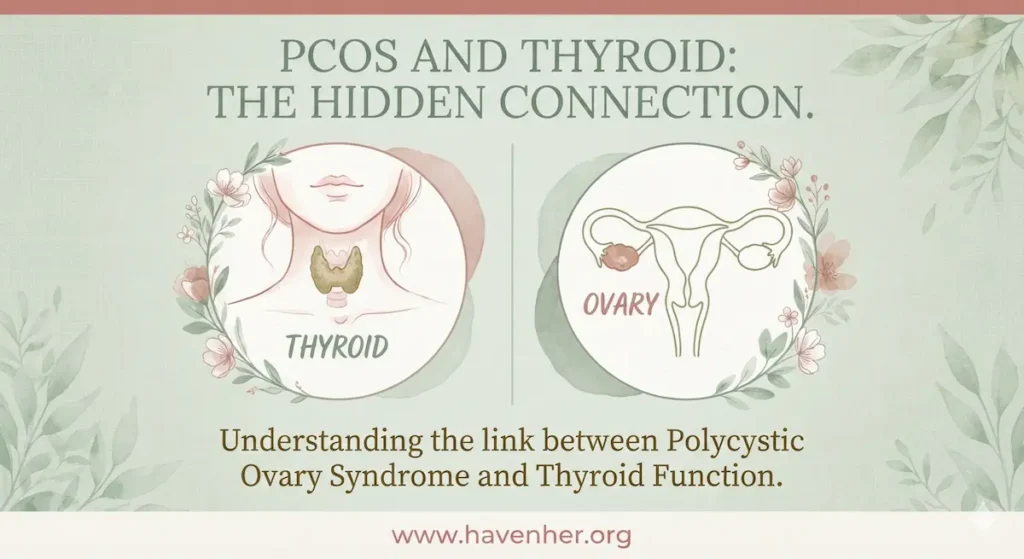
Your reproductive hormones and your thyroid hormones do not operate in separate compartments. They share deeply overlapping regulatory pathways and influence each other constantly.
The hypothalamic-pituitary-ovarian (HPO) axis controls your reproductive hormones. The hypothalamic-pituitary-thyroid (HPT) axis controls your thyroid. Both are regulated by the same master control centre in the brain, and when one axis is disrupted, it sends direct ripple effects through the other.
Thyroid hormones directly influence:
Ovarian function and follicle development
Sex hormone binding globulin (SHBG) levels, which control how much free testosterone circulates in your blood
Insulin sensitivity at the cellular level
Progesterone production in the luteal phase
The pulsatile LH and FSH rhythm required for regular ovulation
When thyroid function is even mildly impaired, every one of these processes is affected. For a woman already managing PCOS, that disruption stacks on top of what is already there. Symptoms become harder to shift, cycles more irregular, and weight loss increasingly resistant to dietary changes.
People searching “does PCOS affect thyroid” or “can PCOS cause thyroid problems” are asking exactly the right questions. The answer is yes, and the relationship runs in both directions.
📊 Three Statistics Every Woman With PCOS Needs to See
26.9% of women with PCOS have Hashimoto’s thyroiditis markers compared to 8.3% of women without PCOS, a more than threefold higher risk. Source: PMC NIH, The role of the thyroid in polycystic ovary syndrome (PMC10585146)
22.1% of women with PCOS have confirmed Hashimoto’s thyroiditis, compared to just 5% in women without PCOS. Source: NIH-published study, Arduc et al.
Women with PCOS have a 27.5% prevalence of goiter versus 7.5% in controls, and 22.5% subclinical hypothyroidism versus 8.75% in controls. Source: PMC cross-sectional thyroid-PCOS literature
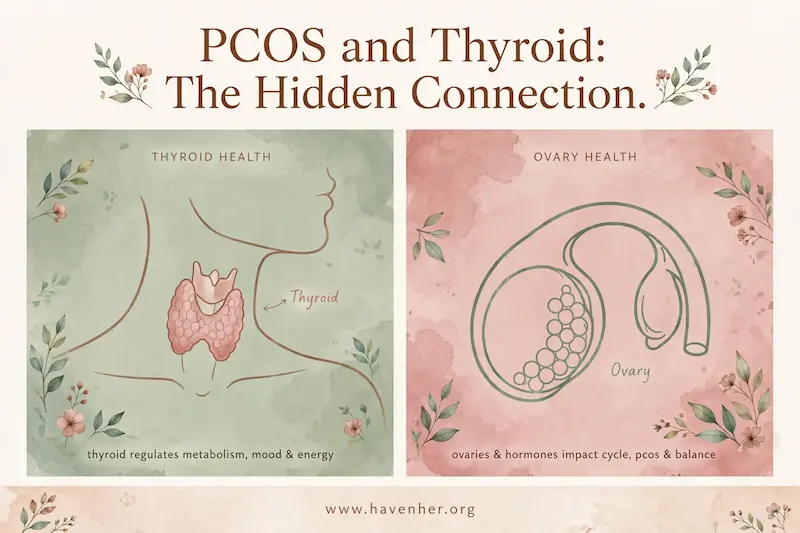
Thyroid regulates metabolism, mood and energy. Ovaries and hormones impact cycle, PCOS and hormonal balance. When both are affected, symptoms are compounded.
PCOS vs Thyroid vs Both: Overlapping Symptoms at a Glance
Symptom
PCOS Only
Thyroid Only
PCOS and Thyroid Together
Irregular periods
✅ Yes
✅ Yes
✅ More severe and unpredictable
Hair loss at crown or temples
✅ Yes
✅ Yes
✅ Accelerated, often across full scalp
Weight gain or inability to lose weight
✅ Yes
✅ Yes
✅ Compounded by both mechanisms
Fatigue
✅ Yes
✅ Yes
✅ Profound, unrelieved by sleep or rest
Depression and anxiety
✅ Yes
✅ Yes
✅ Intensified by neurobiological overlap
Infertility or difficulty conceiving
✅ Yes
✅ Yes
✅ Significantly higher combined risk
Cold hands, feet, cold intolerance
❌ Rarely
✅ Yes
✅ Strong specific indicator of thyroid involvement
Constipation, slow digestion
❌ Rarely
✅ Yes
✅ Present when thyroid is involved
Neck swelling or fullness
❌ No
✅ Yes (goiter)
✅ Flags thyroid issue specifically
Acne and excess hair growth (hirsutism)
✅ Yes
❌ Not typical
✅ Androgen-driven, PCOS component
🌡️ Tampa Tip Florida’s heat makes cold intolerance easy to dismiss. If you live in Pinellas, Hillsborough, or Pasco County and you feel noticeably colder than people around you, struggle in air conditioning, or need extra layers indoors while everyone else is comfortable, this is a real clinical thyroid signal. Do not write it off as just being “used to the Florida warmth.” When this symptom appears alongside fatigue, hair loss, and irregular periods, it points directly toward thyroid involvement.
Can PCOS Cause Thyroid Problems? Or Does Thyroid Cause PCOS?
Both directions are real. The relationship is genuinely bidirectional, and understanding this is what changes how you get answers.
How PCOS Worsens Thyroid Function
The insulin resistance at the core of PCOS directly impairs thyroid hormone conversion. Your body produces most thyroid hormone in the inactive form, T4. It then converts T4 to the active form, T3, primarily in the liver, kidneys, and gut. Insulin resistance disrupts this conversion at every step. You can have a TSH reading that looks perfectly acceptable while the active thyroid hormone available to your cells is genuinely low.
Chronic inflammation, which is measurably elevated in women with PCOS, compounds this by increasing a protein called reverse T3 (rT3). Reverse T3 is an inactive mirror image of T3 that blocks T3 receptors without switching them on. High rT3 means your cells are being actively blocked from using the thyroid hormone that is already circulating. A standard TSH blood test will not detect this at all.
How Thyroid Dysfunction Triggers PCOS-Like Symptoms
When the thyroid is underactive, even at a subclinical level, it raises prolactin (which directly blocks ovulation), disrupts the LH-to-FSH ratio that governs the menstrual cycle, reduces SHBG and allows more free testosterone to circulate, and worsens insulin resistance through its own independent pathway.
Some women diagnosed with PCOS may actually have their primary hormonal driver sitting in an untreated thyroid condition. The PCOS diagnosis is not necessarily wrong, but the full picture has not been drawn.
The Autoimmunity Link That Ties Both Together
Women with PCOS have a measurably dysregulated immune environment. Elevated inflammatory cytokines, altered T-cell activity, and chronic low-grade inflammation all create conditions that increase susceptibility to autoimmune disease. The most common autoimmune condition affecting the thyroid is Hashimoto’s thyroiditis, which is also the leading cause of hypothyroidism worldwide.
This is not a coincidence. It is a shared immunological vulnerability that puts women with PCOS at significantly greater risk of developing Hashimoto’s than the general female population.
Hashimoto’s and PCOS: The Autoimmune Connection Nobody Is Talking About
This is the section most doctors never bring up with their PCOS patients. And in 15 years of practice, it is the piece that Dr. Mehwish Saif says changes things most dramatically for women who have been stuck.
Hashimoto’s thyroiditis is an autoimmune condition in which the immune system produces antibodies that progressively attack and destroy the thyroid gland. Over years, this damage reduces the thyroid’s ability to produce adequate hormones, leading to hypothyroidism. It is the most common cause of hypothyroidism in the United States.
The overlap with PCOS is not minor. A 2026 systematic review and meta-analysis published in Frontiers in Endocrinology (Albalawi and Mirghani, 2026) confirmed that women with PCOS are 2.69 times more likely to develop Hashimoto’s thyroiditis than women without PCOS (OR 2.69; 95% CI: 1.63 to 4.42). The same review found that women carrying both conditions had significantly worse insulin resistance scores than women with PCOS alone. Two conditions compounding each other, every single day, with most women never knowing both are present.
Symptoms That Should Prompt You to Think Hashimoto’s and PCOS Together
Fatigue that does not improve with sleep, no matter how many hours you get
Cold intolerance, feeling cold when people around you are perfectly comfortable
Neck fullness or tightness, especially noticeable when you swallow
Hair thinning across the full scalp, not just at the crown, with thinning of the outer eyebrows
Persistent depression or brain fog that is not connected to anything going on in your life
Constipation, bloating, and slowed digestion that diet changes do not fix
Puffiness in the face or around the eyes, especially in the morning
Heart palpitations or anxiety episodes, which can occur in the fluctuating early phases of Hashimoto’s before the thyroid is fully underactive
🩺 Doctor’s Note from Dr. Mehwish Saif In my 15 years of practice in St. Petersburg, I have seen women with PCOS who were finally prescribed thyroid support only after I ordered a full antibody panel that no previous doctor had ever thought to run. A TSH of 3.8 mIU/L shows up as “normal” on a lab printout. But when you combine that with elevated TPO antibodies, clear clinical symptoms, and a PCOS diagnosis, that same result becomes a clinically meaningful finding that warrants monitoring and, in many cases, active management. Running the full thyroid panel I describe in this article is not excessive or unusual. It is what every woman with PCOS deserves to have done.
Want to test from home before your next appointment? Both Everlywell and LetsGetChecked offer thyroid panels that include TSH, free T4, free T3, and TPO antibodies. They are a useful starting point and can give you data to bring to your doctor. [Affiliate link: Everlywell Thyroid Test | LetsGetChecked Thyroid Panel]
PCOS Hypothyroidism: When the Symptoms Look Completely Identical
Here is what makes the PCOS and thyroid overlap so clinically challenging. Eight of the most common symptoms look almost entirely the same whether they are being driven by PCOS alone, by PCOS hypothyroidism together, or by a thyroid condition masquerading as PCOS.
The 8 symptoms that overlap completely:
Weight gain, particularly around the abdomen, that resists dietary changes
Irregular or absent periods
Hair loss at the scalp
Infertility and irregular ovulation
Depression and persistent low mood
Dry, dull skin
Constipation and slowed digestion
Fatigue throughout the day that rest does not resolve
How to Tell Which Is Which: Five Questions That Help
These five questions help separate whether thyroid involvement is likely alongside your PCOS. They do not replace testing, but they point you in the right direction.
Do you feel cold all the time, or noticeably colder than people around you? Cold intolerance is a thyroid symptom. It is not a PCOS one.
Is your hair thinning evenly across the whole scalp, or specifically at the crown? Even diffuse thinning with outer eyebrow loss points more strongly toward thyroid. Crown-specific thinning in a pattern matching androgenic alopecia points more toward PCOS-driven androgens.
Do you have regular constipation, not just occasional? Persistent slowing of bowel motility is a thyroid flag, not a typical PCOS feature.
Has your voice become slightly deeper or hoarser over time? This can accompany thyroid gland enlargement and is worth mentioning to your doctor.
Have you been on a well-structured PCOS diet and lifestyle plan for three months or more with no meaningful improvement at all? Treatment resistance is one of the strongest clinical signals that a co-existing thyroid condition is active and unaddressed.
If you answered yes to two or more of those questions, a full thyroid panel is not optional. It is overdue.
You are not imagining it. There is a real, systemic reason that the PCOS and thyroid connection gets missed in standard care, and it comes down to one habit: ordering only a TSH.
Most GPs and many OB-GYNs order a single thyroid test. When TSH falls within the standard lab reference range, the thyroid is declared normal and the conversation is over.
The problem is structural. The standard TSH reference range (roughly 0.5 to 4.5 mIU/L) was built from a general population that included people with undiagnosed thyroid disease. For women with PCOS who are trying to conceive, most reproductive endocrinologists and fertility specialists now consider a TSH above 2.5 mIU/L suboptimal, even when lab software prints “normal” next to the result. Research confirms that TSH levels between 2.5 and 4.5 mIU/L are associated with lower live birth rates in women undergoing fertility treatment.
And TSH tells you nothing about Hashimoto’s. A woman with a TSH of 2.1 and TPO antibodies quietly destroying her thyroid tissue will receive a “thyroid is fine” verdict and leave without a single follow-up recommendation.
The PCOS thyroid panel you actually need is entirely different from what most doctors order.
What to Say at Your Tampa OB-GYN or Endocrinology Appointment
Screenshot this and bring it with you:
“I have PCOS and I would like a complete thyroid panel. I am specifically requesting TSH, free T4, free T3, reverse T3, TPO antibodies, and thyroglobulin antibodies. A TSH result alone is not sufficient for a woman with PCOS.”
🌡️ Tampa Tip If your doctor is unwilling to run a full panel after a PCOS diagnosis, that is important information. You deserve care from someone who understands the PCOS and thyroid connection and will investigate the complete picture. Dr. Mehwish Saif’s practice at 7901 4th St N, STE 17639, St. Petersburg, FL 33702 offers comprehensive hormonal and thyroid evaluation for women across Pinellas, Hillsborough, and Pasco counties. Call us at 001 716 295 1575 or email info@havenher.org.
🎁
FREE DOWNLOAD: PCOS + Thyroid Lab Checklist
Tampa Bay Edition • Medically Reviewed by Dr. Mehwish Saif
Take to your doctor • Includes TSH, Free T4, Free T3, Antibodies, LH/FSH, Testosterone, Insulin, Vitamin D & more
✓ 1-Page Printable • ✓ Checklist Format • ✓ Doctor-Ready
The Exact Thyroid Tests Every Woman With PCOS Needs: Your PCOS Thyroid Panel
Test
What It Measures
Standard Lab Range
Optimal Range for PCOS
Why It Matters
TSH
How hard the pituitary is working to stimulate the thyroid gland
0.5 to 4.5 mIU/L
1.0 to 2.0 mIU/L; below 2.5 if trying to conceive
A TSH above 2.5 with PCOS symptoms warrants attention regardless of what the lab report says
Free T4
Inactive thyroid hormone circulating in your blood
0.8 to 1.8 ng/dL
Middle to upper third of the reference range
Low-normal free T4 with symptoms is a reason for a treatment conversation, not reassurance
Free T3
The active thyroid hormone your cells actually use
2.3 to 4.2 pg/mL
Upper half of range: 3.2 to 4.2 pg/mL
This is what drives your energy, metabolism, mood, and weight. Often low despite a normal TSH.
Reverse T3 (rT3)
The inactive T3 blocker produced under chronic stress and inflammation
9.2 to 24.1 ng/dL
Below 15 ng/dL
High rT3 with a normal TSH means your active thyroid hormones are being blocked at the cell level
TPO Antibodies
Immune attack on the enzyme the thyroid needs to produce hormones
Below 34 IU/mL
Below 9 IU/mL, ideally undetectable
The primary diagnostic marker for Hashimoto’s. Can be elevated for years before TSH becomes abnormal.
Thyroglobulin Antibodies (TgAb)
Immune attack on thyroglobulin, the protein used to synthesise thyroid hormone
Below 115 IU/mL
Ideally undetectable
Some Hashimoto’s cases show elevated TgAb with normal TPO. You need both antibodies tested, not one.
[Affiliate opportunity: Inito, Mira, or at-home hormone and thyroid testing options]
Thyroid and Hormone Imbalance: How to Actually Break the Cycle
Once you have your full thyroid picture from testing, the clinical goal is breaking the feedback loop between thyroid dysfunction, PCOS, and insulin resistance. Here is what the evidence supports, written for women managing both conditions in a Florida climate that adds its own physiological layer.
1. Tackle Inflammation First
Both PCOS and Hashimoto’s are inflammatory conditions at their roots. Reducing systemic inflammation through diet is the foundation, not an add-on.
For women in Tampa Bay specifically, Florida’s summer heat from May through October is a documented physiological stressor that raises cortisol and inflammatory cytokines. Combine that with a diet built on ultra-processed food and refined sugar, and you are actively making both conditions harder to manage every single day.
Anti-inflammatory foods that support both PCOS and thyroid health:
Fatty fish: salmon, sardines, mackerel, all rich in omega-3s that support thyroid function and reduce inflammation
Dark leafy greens: spinach, kale, Swiss chard
All varieties of berries
Extra virgin olive oil and avocado
Turmeric with black pepper: curcumin has published anti-inflammatory evidence in both PCOS and thyroid conditions
Foods that actively worsen both conditions:
Ultra-processed food and seed oils high in omega-6 fatty acids
Refined sugar and high-fructose corn syrup
Gluten: specifically relevant for women with confirmed Hashimoto’s who also have gluten sensitivity, not a blanket recommendation for all PCOS
Excessive raw cruciferous vegetables: goitrogens can modestly impair iodine uptake in thyroid-compromised individuals, though cooking reduces this effect significantly
Around 20% of T4-to-T3 conversion happens in the gut lining. When the gut microbiome is disrupted, which it measurably is in both PCOS and Hashimoto’s, active thyroid hormone production falls as a direct consequence. Research published in 2025 confirmed distinct gut microbiome disruptions in women with PCOS.
Supporting gut health through fermented foods such as unsweetened yogurt, kefir, and sauerkraut, prebiotic-rich vegetables like asparagus, garlic, and onion, and reducing ultra-processed food intake directly supports thyroid conversion, not just digestion.
3. Selenium, Zinc, and Iodine: What the Evidence Actually Shows
These three minerals are directly required for thyroid hormone production and the reduction of thyroid autoimmune activity.
Selenium at 200 mcg daily: A systematic review of five RCTs found that selenium supplementation at 200 mcg daily improved total antioxidant capacity in women with PCOS and measurably reduced thyroid antibody levels in women with Hashimoto’s. A 2025 network meta-analysis confirmed selenium as the most potent single supplement for raising insulin sensitivity (QUICKI) in PCOS. Do not exceed 400 mcg daily. Selenium toxicity is real and serious.
Zinc at 25 to 40 mg daily: Research in Frontiers in Endocrinology (2025) showed zinc sulfate improved insulin resistance and reduced oxidative stress in PCOS through the NF-kB pathway. Zinc is also a direct cofactor for thyroid hormone synthesis and T4-to-T3 conversion.
Iodine: Essential for thyroid hormone production but must be approached carefully. Women with Hashimoto’s can worsen significantly with excess iodine supplementation. Get dietary iodine from seafood, eggs, and dairy rather than high-dose supplements. Do not add iodine supplements without testing and guidance from your provider first.
[Affiliate opportunity: Thorne Research Selenium, Zinc bisglycinate, Vitamin D with K2, and inositol with thyroid support bundle via Amazon]
A note from Dr. Mehwish Saif: Everything listed here has clinical evidence behind it. That does not make it safe at any dose for every person. Selenium and zinc at higher doses cause toxicity, and iodine can actively worsen Hashimoto’s. Please discuss your supplement plan with a qualified provider before you start anything.
4. Cortisol and Florida Heat: An Underappreciated Factor
Chronic stress raises cortisol. Cortisol directly suppresses thyroid function by reducing TSH release from the pituitary, impairing T4-to-T3 conversion in the liver, and increasing reverse T3 production throughout the body.
In Tampa Bay’s summer climate, where temperatures regularly exceed 90°F with high humidity from May through September, heat is a documented physiological stressor that measurably elevates HPA axis reactivity. This compounds the cortisol load on an already-stressed hormonal system in ways that most standard PCOS advice never acknowledges.
Managing cortisol through consistent sleep schedules, scheduling outdoor exercise before 8am during Florida summers, choosing indoor strength training during peak heat months, and building daily parasympathetic practices such as breathing exercises or gentle yoga all support thyroid function indirectly but in measurable ways.
Medical disclaimer: The dietary and supplement information in this section is for educational purposes only and does not constitute medical advice. Always consult a qualified healthcare provider before changing your diet, starting supplements, or adjusting any prescribed medications.
Can Treating Your Thyroid Actually Improve Your PCOS Symptoms?
Yes. And the evidence for this is meaningful enough that it should change how every PCOS treatment plan is approached.
Research published in Clinical Endocrinology (2025) found that thyroid hormone levels directly correlate with how well ovulation induction works in infertile women with PCOS. Women with thyroid function in the clinically optimal range responded significantly better to treatment than women with suboptimal levels, including women whose TSH technically fell within the standard lab reference range.
A 2022 study published in Biomedicines found that thyroid function status significantly affects both pregnancy outcomes and neonatal outcomes in women with PCOS, reinforcing why optimising thyroid levels before attempting conception matters so concretely.
Additionally, six months of metformin treatment in women with both PCOS and Hashimoto’s was found to normalise TSH values in a meaningful proportion of patients. This is a notable finding because it shows that addressing the metabolic root of PCOS, specifically insulin resistance, can improve thyroid function as a downstream effect without directly treating the thyroid at all.
✨ From a Tampa Bay Patient (Anonymous) “I had PCOS from the time I was 22. Four years of doing the right things: clean diet, no refined sugar, supplements, regular exercise. Nothing moved the way it was supposed to. My periods were still all over the place, I was exhausted every single day, and I had gained about 15 pounds I absolutely could not shift. When I finally got a full thyroid panel done at 26, my TSH was 3.4, which my previous doctor had called normal.
But my TPO antibodies were extremely elevated and my free T3 was sitting in the bottom tenth of the reference range. Once we treated the Hashimoto’s properly, my cycles started to regulate within three months. I am not saying it fixed everything. But it was the piece that four years of PCOS management had completely missed.” Shared with the patient’s permission. Identifying details have been changed to protect privacy.
When to See a Specialist in Tampa Bay
See Your OB-GYN First If:
You have a PCOS diagnosis and have never had a full thyroid panel beyond a TSH
Your symptoms are worsening or stalling despite consistent dietary and lifestyle management
You are preparing to conceive and want your thyroid and hormone status fully optimised before starting
Ask for an Endocrinology Referral If:
Your TPO or TgAb antibodies are elevated on initial testing
Your free T3 falls in the lower quarter of the reference range with symptoms present
Your TSH is consistently above 2.5 mIU/L and you have ongoing PCOS symptoms
You have been diagnosed with both PCOS and Hashimoto’s and need a coordinated, integrated treatment plan for both
Tampa Bay has strong endocrinology resources across the region. The following institutions offer established thyroid and endocrinology services and accept most insurance plans. These are informational references only and do not represent a medical referral:
Tampa General Hospital Endocrinology (USF Health): Comprehensive thyroid evaluation including ultrasound and full antibody panels
BayCare Medical Group Endocrinology: Multiple locations across Pinellas and Hillsborough counties
AdventHealth Tampa: Integrated endocrinology with access to reproductive endocrinology services
For women who want a thorough starting evaluation before specialist referral, Dr. Mehwish Saif’s practice at 7901 4th St N, STE 17639, St. Petersburg, FL 33702 provides comprehensive PCOS and thyroid assessment for women across Pinellas, Hillsborough, and Pasco counties.
Can you have PCOS and hypothyroidism at the same time?
Yes, and it is far more common than most women or their doctors appreciate. Research consistently shows that women with PCOS carry a threefold higher prevalence of Hashimoto’s thyroiditis compared to women without PCOS. When both PCOS and hypothyroidism are present simultaneously, each condition worsens the other through shared mechanisms: insulin resistance, chronic inflammation, and disruption to the HPO-HPT axis overlap. Treating only one while leaving the other unaddressed significantly limits the results of any management approach.
Does Hashimoto’s make PCOS worse?
Yes, in several measurably documented ways. A 2026 meta-analysis in Frontiers in Endocrinology found that women with both PCOS and Hashimoto’s had significantly higher insulin resistance scores (HOMA-IR) than women with PCOS alone. Beyond insulin resistance, Hashimoto’s elevates prolactin (blocking ovulation), disrupts the LH-to-FSH ratio, reduces SHBG (allowing more free testosterone to circulate freely), and impairs the T4-to-T3 conversion that governs active thyroid hormone availability. Every one of those effects lands directly on PCOS symptoms.
What thyroid levels should I worry about with PCOS?
For women with PCOS, a TSH above 2.5 mIU/L is worth discussing with your provider even when it sits within the standard lab reference range. Free T3 in the lower quarter of the reference range, elevated TPO antibodies, or elevated thyroglobulin antibodies all warrant clinical attention regardless of where TSH falls. The standard lab normal is not the same as the optimal range for a woman managing PCOS. The full panel of six tests described in this article gives you the complete picture. TSH alone does not.
Can thyroid medication help me get pregnant with PCOS?
Research published in Clinical Endocrinology (2025) found that optimal thyroid hormone levels directly improve how well ovulation induction works in infertile women with PCOS. Correcting subclinical hypothyroidism before attempting conception improves ovulation response, reduces early miscarriage risk (elevated TPO antibodies are independently linked to pregnancy loss even with a normal TSH), and improves live birth rates in treatment cycles. Thyroid medication alone is not a fertility treatment, but when thyroid dysfunction is the barrier, addressing it can make a real difference to fertility outcomes.
Is my weight gain from PCOS or thyroid?
Honestly, often both, and only blood testing tells you your individual picture. PCOS-driven weight gain is primarily driven by insulin resistance promoting fat storage, particularly in the abdomen. Thyroid-driven weight gain comes from a reduced metabolic rate as the body conserves energy when active thyroid hormones are insufficient. When both are present together, the two mechanisms reinforce each other, which is why many women with undiagnosed PCOS hypothyroidism find that even a well-structured PCOS diet produces frustratingly little result. Treating both conditions gives you the complete metabolic support your body needs.
How often should I test thyroid if I have PCOS?
With an initial full panel showing no antibody elevation and normal thyroid function, testing TSH and free T4 annually is a reasonable baseline. If TPO or TgAb antibodies are elevated but thyroid function is currently within normal range, testing every six months is more appropriate because antibody-positive women progress to overt hypothyroidism at a clinically meaningful rate. If you are actively trying to conceive, test before you start trying and again in early pregnancy regardless of previous results. Always confirm the right monitoring schedule with your provider based on your specific numbers and symptoms.
Conclusion
The PCOS and thyroid connection is not a fringe idea. It is a documented, peer-reviewed clinical relationship backed by a 2026 systematic review showing a 2.69-fold elevated Hashimoto’s risk in women with PCOS, measurably worse insulin resistance when both conditions are present, and real evidence that optimising thyroid function improves ovulation response, fertility outcomes, and PCOS symptom management.
If you have been doing everything right for your PCOS and still feel like something is missing, the answer may be sitting in six blood tests that nobody has ever ordered for you.
Do not guess. Test.
TSH alone is not your answer. You need the full picture: TSH, free T4, free T3, reverse T3, TPO antibodies, and thyroglobulin antibodies. You deserve a provider who understands why all six of those numbers matter together and what to do when they are not in the optimal ranges for a woman with PCOS.
Your Next Steps
Download your free PCOS and Thyroid Starter Kit: the lab request sheet, anti-inflammatory food list built for Tampa Bay women, and supplement checklist, all in one place. [EMAIL_SIGNUP_LINK]
Affiliate disclosure: Some links in this article are affiliate links. HavenHer.org may earn a small commission at no additional cost to you if you make a purchase through these links. We only recommend products we have reviewed and believe are genuinely useful for women managing PCOS and thyroid conditions.
About This Article
This guide was researched and written by the HavenHer editorial team. It has been clinically reviewed, verified, and personally approved by Dr. Mehwish Saif, Family Medicine Practitioner with over 15 years of clinical experience, practising at 7901 4th St N, STE 17639, St. Petersburg, Florida 33702. Dr. Saif has reviewed all statistical claims, optimal lab ranges, supplement guidance, and clinical recommendations for accuracy and compliance with current evidence-based standards in reproductive endocrinology and thyroid medicine. HavenHer.org is committed to publishing women’s health education to the highest possible editorial and clinical standards.
Medical Disclaimer
The information in this article is for general educational purposes only and does not constitute medical advice, diagnosis, or treatment of any kind. Thyroid conditions and PCOS interact differently in each individual. Supplement doses, optimal lab ranges, and management strategies described here require personalised clinical evaluation before being applied. Do not self-diagnose, self-treat, or change any prescribed medication on the basis of this article alone. If you are experiencing significant or acute symptoms, seek immediate medical care. Always consult a qualified healthcare provider before starting any supplement, dietary protocol, or testing plan.
References and Authoritative Resources
All references verified by Dr. Mehwish Saif. Evidence base as of August 2026.
Albalawi Y, Mirghani H. The crosstalk between polycystic ovary syndrome and Hashimoto thyroiditis: a systematic review and meta-analysis. Frontiers in Endocrinology. 2026. doi:10.3389/fendo.2026.1809000. frontiersin.org
The role of the thyroid in polycystic ovary syndrome. PMC NIH. 2023. PMC10585146. pmc.ncbi.nlm.nih.gov
Correlation between Hashimoto’s thyroiditis and polycystic ovary syndrome: a systematic review and meta-analysis. PMC NIH. 2022. PMC9659921. pmc.ncbi.nlm.nih.gov
Hao X, et al. Thyroid hormones correlate to the therapeutic effect of ovulation induction in infertile women with polycystic ovary syndrome. Clinical Endocrinology. 2025. doi:10.1111/cen.70030. onlinelibrary.wiley.com
Feigl S, et al. Impact of thyroid function on pregnancy and neonatal outcome in women with and without PCOS. Biomedicines. 2022;10:750. doi:10.3390/biomedicines10040750. mdpi.com
Kang YF, et al. Zinc sulfate improves insulin resistance, oxidative stress and apoptosis in PCOS via the NF-kB pathway. Frontiers in Endocrinology. 2025. PMC12178883. pmc.ncbi.nlm.nih.gov
Comparison of nutritional supplements in PCOS: systematic review and network meta-analysis. PMC NIH. 2023. PMC10652859. pmc.ncbi.nlm.nih.gov
Autoimmune thyroid disease and female fertility: Does Anti-TPO accelerate ovarian aging? PMC NIH. 2025. PMC12653286. pmc.ncbi.nlm.nih.gov
Andres-Montenegro N, et al. Nutritional Supplements for PCOS: Clinical Evidence and Recommendations. Bionatura. 2025;2(2). bionaturajournal.com
Teede HJ, et al. 2023 International Evidence-Based Guideline for PCOS Assessment and Management. Journal of Clinical Endocrinology and Metabolism. 2023;108(10):2447. academic.oup.com
American Thyroid Association. Thyroid Function Tests. thyroid.org
Office on Women’s Health, U.S. Department of Health and Human Services. Thyroid Disease. womenshealth.gov
Mayo Clinic. Hashimoto’s Disease: Symptoms and Causes. mayoclinic.org
Endocrine Society. Hypothyroidism in Women. endocrine.org