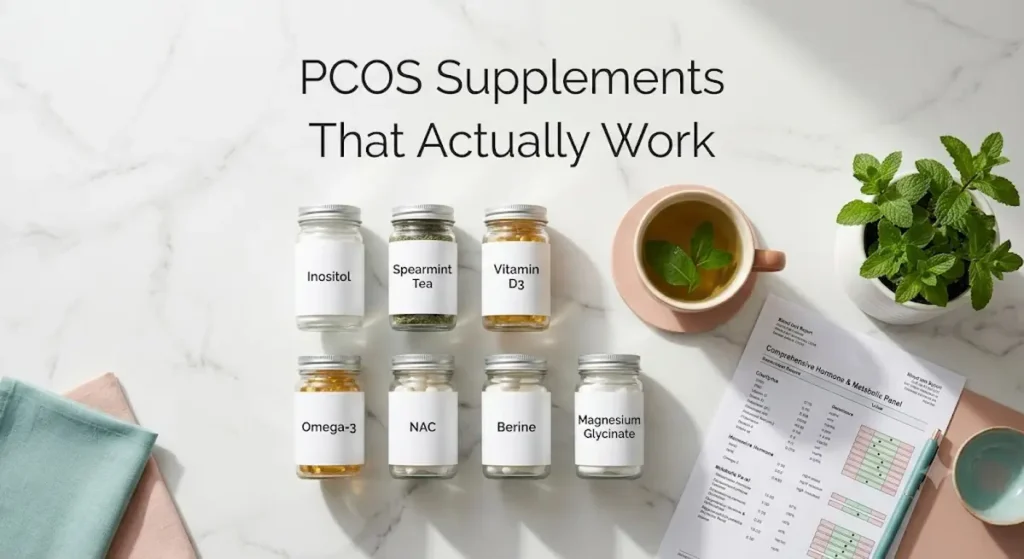

7 Proven PCOS Supplements That Actually Work: Inositol, Spearmint & More (Evidence-Based Guide)
Key Takeaways
- Several PCOS supplements have genuine clinical evidence behind them — but most popular “hormone balance” blends on the market do not.
- Inositol (particularly myo-inositol at a 40:1 ratio with D-chiro-inositol) is the most clinically supported supplement for insulin sensitivity and ovulation in PCOS.
- Spearmint tea is the only herbal option with RCT evidence specifically for lowering testosterone in PCOS. Two cups daily is the studied protocol.
- Vitamin D deficiency is common in women with PCOS — and paradoxically common in Florida, where sun avoidance during extreme heat leaves many women deficient despite living in one of the sunniest states in the country.
- Berberine, omega-3 fatty acids, NAC, and magnesium glycinate each have meaningful supporting evidence, though the quality varies.
- No supplement replaces a structured PCOS diet and lifestyle approach. Supplements work best when layered onto a strong nutritional foundation.
- Allow a minimum of 8–12 weeks before assessing whether any supplement is working.
Introduction
Walk into any pharmacy or health food store and you will find a wall of supplements claiming to support “hormone balance,” “cycle regularity,” and “PCOS relief.” Most of them are a combination of wishful marketing and modest ingredients at doses too low to replicate the studies they cite on the label.
The good news is that 7 PCOS supplements have real, peer-reviewed clinical evidence behind them for PCOS and for those, the research is worth understanding in detail. Before taking any supplement, confirm you actually have PCOS. Check this doctor-reviewed PCOS Symptoms Checklist 2026.
This guide cuts through the noise. It covers the PCOS supplements with the strongest evidence, explains exactly how each one works in the context of PCOS biology, gives you the doses studied in clinical trials, and is honest about where the evidence is strong versus where it is still emerging. There is also a specific note for women in Florida and the Tampa Bay area, where a counterintuitive vitamin D problem is frequently missed.
If you are still working on your foundational PCOS nutrition strategy, start with our 7-Day PCOS Meal Plan for Beginners and our PCOS Insulin Resistance Diet Guide before adding supplements. Supplements are the final layer — not the foundation.
Why PCOS Creates Specific Nutritional Gaps
PCOS is not simply a reproductive condition. At its metabolic core, it is a disorder of insulin signalling, chronic low-grade inflammation, and androgen excess — and each of these processes depletes or impairs the body’s ability to use specific nutrients.
Confused about PCOS vs PMOS? Here’s the difference + the new 2026 diet plan for women.
Women with PCOS have higher rates of vitamin D deficiency, lower magnesium levels, disrupted inositol metabolism within the ovaries, and elevated oxidative stress that depletes antioxidant reserves. These are not coincidences. They are predictable consequences of the PCOS metabolic environment.
This is why certain supplements can make a meaningful difference when the foundational diet is already solid — they address the specific gaps that PCOS creates, rather than offering general “wellness” support. Using PCOS supplements but wanna know how to get pregnant with PCOS , you are at right place.
💡 Expert Tip Before spending money on supplements, get baseline bloodwork. At minimum, request fasting insulin, HOMA-IR, full thyroid panel, and 25-hydroxyvitamin D. These four tests reveal the most actionable nutritional gaps in PCOS and tell you exactly which supplements deserve priority. Dr. Mehwish Saif’s office in St. Petersburg, FL offers comprehensive hormone and metabolic panels for women across the Tampa Bay area — contact us through the link below.
Supplement 1: Inositol (Myo-Inositol + D-Chiro-Inositol)
What It Does
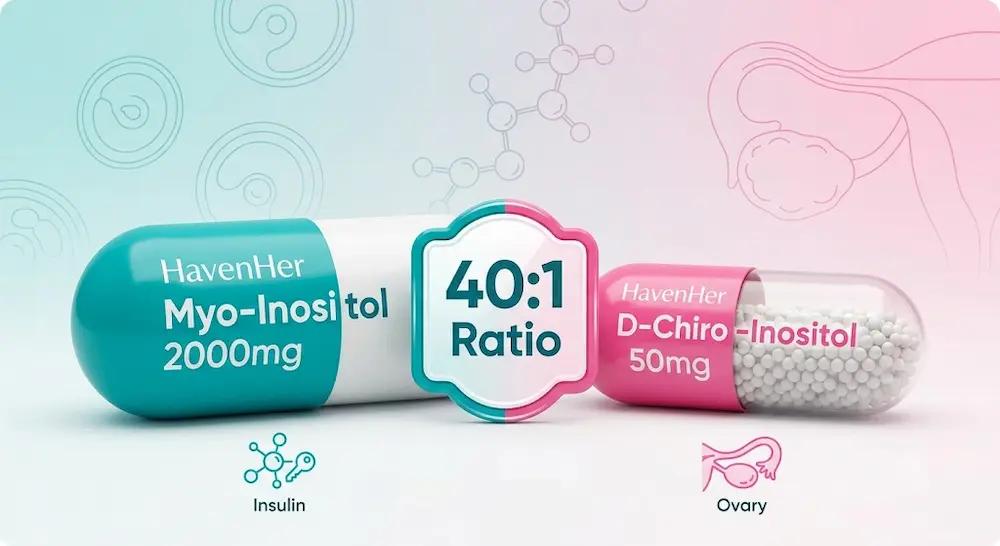
Image: AI-generated illustration for HavenHer.org
Inositol is the supplement with the strongest evidence base in PCOS research. It is a naturally occurring carbohydrate compound that plays a central role in insulin signalling specifically in how cells respond to insulin and absorb glucose. In women with PCOS, the ovaries have a disrupted inositol ratio: where a healthy ovary maintains a myo-inositol to D-chiro-inositol (MI:DCI) ratio of approximately 100:1, the PCOS ovary can be as low as 0.2:1. This imbalance directly impairs ovarian function, insulin sensitivity, and androgen production.
Supplementing with inositol — particularly in the clinically studied 40:1 MI:DCI ratio — works to restore this balance at the cellular level. Supplements recommended in the new PMOS diet plan. Compare PCOS vs PMOS nutrition.
What the Research Shows
A systematic review and meta-analysis published in the Journal of Clinical Endocrinology and Metabolism (2024), conducted to inform the 2023 International Evidence-Based PCOS Guidelines, found that myo-inositol and D-chiro-inositol supplementation produced measurable improvements in metabolic markers and potential benefits for ovulation in women with PCOS. Supplements work better with food. Pair them with these 25 PCOS snacks for insulin sensitivity.
A 2024 study published in Gynecologic and Obstetric Investigation specifically evaluated the 40:1 MI:DCI ratio in 34 women with PCOS Phenotype A over three months. The researchers found significant improvements in HOMA-IR (insulin resistance index), free androgen index, anti-Müllerian hormone, and LH levels — all markers central to PCOS management.
Separately, a 2025 systematic review and meta-analysis published in PMC evaluated 17 randomized controlled trials on myo-inositol’s effects on assisted reproductive technology outcomes in women with PCOS, finding meaningful improvements in oocyte quality, hormonal balance, and clinical pregnancy rates.
🔬 Research Summary The 40:1 myo-inositol to D-chiro-inositol ratio is not arbitrary — it mirrors the physiological ratio of these compounds in healthy ovarian follicular fluid. Supplementing at this ratio appears to correct the PCOS-specific inositol depletion that impairs both insulin signalling and ovulation. The 2023 International PCOS Guidelines acknowledge inositol as a supplement clinicians and patients may consider, with the caveat that evidence quality is currently moderate and individual responses vary.
Who It Is Best For
- Women with PCOS trying to improve insulin sensitivity
- Women with PCOS trying to conceive or improve ovulation regularity
- Women who cannot tolerate metformin or who prefer a non-pharmaceutical approach (alongside medical guidance)
Recommended Dose
Myo-inositol: 2,000 mg twice daily (4,000 mg/day total), combined with D-chiro-inositol at a 40:1 ratio. Many products provide this ratio in pre-combined form. Adding 200 mcg of folic acid is standard in most studied protocols and supports ovarian function.
Allow at least 3 months of consistent use — ovarian follicle development takes approximately 90 days, and hormonal changes are not visible on a shorter timeline.
Safety and Interactions
Inositol has an excellent safety profile. The most common side effect is mild gastrointestinal discomfort, which is significantly less frequent than with metformin. If you are already taking metformin, discuss combining it with inositol with your doctor — some evidence suggests the two can complement each other.
Supplement 2: Spearmint Tea
What It Does
Spearmint tea (Mentha spicata) is the only herbal intervention for PCOS with published randomized controlled trial evidence specifically targeting androgen reduction. It addresses the testosterone excess that drives many of the most frustrating PCOS symptoms — excess facial and body hair (hirsutism), hormonal acne, and scalp hair thinning.
It works through a different mechanism to inositol. Rather than targeting insulin signalling, spearmint appears to reduce androgen production and circulation through rosmarinic acid and flavonoid compounds that modulate the enzymes involved in testosterone synthesis.
What the Research Shows
Two key trials form the evidence base.
The first, a 2010 randomized controlled trial published in Phytotherapy Research, involved 42 women with PCOS-related hirsutism who consumed spearmint herbal tea twice daily for 30 days. The spearmint group showed statistically significant reductions in both free and total testosterone, alongside increases in LH and FSH — the hormones that support ovulation. Subjective hirsutism scores improved significantly, though objective hair counts did not change within 30 days (a timeline too short for hair follicle turnover).
A more recent 2024 randomized controlled trial published in the Journal of the Academy of Nutrition and Dietetics expanded the evidence with 150 participants (75 with PCOS, 75 controls) consuming spearmint tea twice daily for 12 weeks. Testosterone declined by approximately 15% in the PCOS group. DHEA and androstenedione — additional androgens contributing to acne and unwanted hair — also decreased significantly (18% and 14% respectively in the PCOS group).
❓ Did You Know? Spearmint (Mentha spicata) and peppermint (Mentha × piperita) are entirely different plants with different phytochemical profiles. Only spearmint has anti-androgen RCT evidence in PCOS. Peppermint may support digestion, but does not influence testosterone levels. When purchasing, check the label specifies spearmint specifically.
Who It Is Best For
- Women with PCOS whose primary symptoms are excess hair growth, hormonal acne, or scalp thinning
- Women looking for a very low-cost, low-risk addition to their daily routine
- Women with mild-to-moderate androgen excess who prefer a non-pharmaceutical approach to testosterone management
Recommended Protocol
Two cups of spearmint herbal tea daily, made with 1 tablespoon of dried spearmint leaves per cup, steeped for 5–10 minutes in just-boiled water. Loose-leaf spearmint is preferable to tea bags for consistent potency. Allow a minimum of 12 weeks before assessing visible results — hair follicle turnover takes 3–6 months.
Practical Note for Florida Women
Spearmint tea is particularly practical in Florida’s climate. Brew a double-strength batch and refrigerate it overnight. Cold-brewed spearmint over ice is refreshing in St. Pete’s summer heat and maintains the beneficial compounds. Steep at full temperature first, then chill — do not cold-brew from the start, as heat extraction is required for rosmarinic acid.
Supplement 3: Vitamin D — The Florida Paradox
What It Does
Vitamin D is not truly a vitamin — it functions as a hormone, and virtually every cell in the body has vitamin D receptors, including ovarian cells and insulin-producing pancreatic cells. In PCOS specifically, vitamin D deficiency is associated with worsened insulin resistance, elevated testosterone, impaired follicular development, and disrupted menstrual regularity.
A review published in Frontiers in Endocrinology (2025) found that clinicians managing women with PCOS — especially those with metabolic syndrome — must be attentive to vitamin D deficiency, with supplementation recommended when deficiency is confirmed.
The Florida Paradox: Why Sun Does Not Equal Sufficiency
This is the element that makes vitamin D uniquely important for women in the Tampa Bay area and across Florida — and the reason it deserves its own section.
Florida averages 361 days of sunshine per year. Logically, Floridians should have excellent vitamin D levels. In practice, the opposite pattern is frequently observed.
Here is why:
- Sun avoidance during peak heat. From May through October, midday temperatures in St. Petersburg regularly exceed 90°F with high humidity. Most women avoid outdoor sun exposure during the 10am–4pm window when UVB rays are strong enough to trigger vitamin D synthesis. They get light, but not the UVB that creates vitamin D.
- Sunscreen use blocks synthesis. SPF 30+ sunscreen reduces vitamin D synthesis by more than 95%. Women who do venture outside — at the beach, walking, exercising — typically apply sunscreen, which is correct for skin cancer prevention but effectively eliminates vitamin D production from that exposure.
- Car and indoor culture. Air conditioning is essential in Florida’s heat. Most Floridians travel by car, work indoors, and spend the vast majority of sun hours behind glass — which blocks all UVB entirely.
- Dark skin tones require significantly longer sun exposure. Florida’s large Hispanic, Black, and Caribbean-American communities — all well represented in Pinellas County — require 5–10 times longer sun exposure to generate equivalent vitamin D to lighter-skinned individuals. In a climate where that exposure is avoided, deficiency rates in these communities are especially high.
💡 Expert Tip Living in Florida does not mean your vitamin D levels are adequate. Request a 25-hydroxyvitamin D (25-OHD) blood test at your next appointment. For women with PCOS, a target level of 40–60 ng/mL is generally considered optimal for hormonal and metabolic health — well above the general population threshold of 20 ng/mL that most labs flag as sufficient. Do not supplement aggressively without testing: vitamin D is a fat-soluble hormone, and toxicity from excessive supplementation is possible.
What the Research Shows
A PMC study found that 86% of women with PCOS showed vitamin D deficiency (25-OHD below threshold) when evaluated, compared to 14% with normal levels. The deficient group had significantly worse androgen levels, higher insulin resistance, and more severe hormonal disruption.
Supplementation studies have found that correcting vitamin D deficiency in PCOS reduces blood pressure profiles, improves insulin sensitivity, and lowers total testosterone and androstenedione levels.
Recommended Dose
1,000–2,000 IU of vitamin D3 daily as a starting maintenance dose — but this should be personalised to your bloodwork results. Women with confirmed deficiency may require higher short-term doses under medical supervision. Do not exceed 4,000 IU/day without professional guidance. Take with a fat-containing meal for optimal absorption — vitamin D3 is fat-soluble.
Pair with vitamin K2 (MK-7 form, 100–200 mcg daily) if supplementing at higher doses, as K2 helps direct calcium to bones rather than soft tissue.
Supplement 4: Omega-3 Fatty Acids
What They Do
Omega-3 fatty acids — specifically EPA (eicosapentaenoic acid) and DHA (docosahexaenoic acid) — address two of the core drivers of PCOS: chronic low-grade inflammation and triglyceride elevation. Women with PCOS have significantly higher rates of dyslipidaemia and systemic inflammation than age-matched controls, both of which worsen insulin resistance and increase long-term cardiovascular risk.
EPA and DHA reduce inflammatory cytokines, lower triglyceride levels, and improve cell membrane insulin receptor function — making cells more responsive to insulin.
What the Research Shows
A review published in Ovarian Research (2023) on omega-3 supplementation in PCOS found improvements in triglycerides, insulin markers, and waist circumference measures over 8+ weeks of supplementation. Additional studies have found reductions in free testosterone and improvements in menstrual regularity with omega-3 supplementation over 2–6 months.
A nutritional review published in Bionatura (2025) synthesising RCT and meta-analysis data through 2024 confirmed that omega-3 fatty acids consistently improve lipid profiles, hormonal balance, and oxidative stress markers in women with PCOS.
Who It Is Best For
- Women with PCOS with elevated triglycerides or cholesterol
- Women with active inflammation signs (acne, joint discomfort, persistent fatigue)
- Women who consume little oily fish in their diet
Recommended Dose
1–3 grams of combined EPA + DHA daily, taken with meals. Look for supplements that specify the EPA and DHA content per serving (not just total fish oil, which includes less-active fats). A product providing at least 600 mg EPA and 400 mg DHA per capsule is a reasonable benchmark.
Choose brands that test for heavy metals. Wild-caught small fish (sardines, anchovies, mackerel) are the most sustainable and lowest-mercury sources if you prefer to increase dietary intake rather than supplement.
⚠️ Common MistakeMistake: Buying fish oil based on the total milligrams per capsule. Better alternative: Check the Supplement Facts panel specifically for EPA and DHA milligrams. A “1,000 mg fish oil” capsule may contain only 180 mg EPA + 120 mg DHA — well below the studied dose. Aim for the combined EPA + DHA total, not the fish oil total.
Supplement 5: N-Acetylcysteine (NAC)
What It Does
N-acetylcysteine (NAC) is a precursor to glutathione — the body’s primary endogenous antioxidant. In PCOS, elevated oxidative stress depletes glutathione, which worsens insulin resistance, impairs ovarian function, and drives the inflammatory cascade that underlies many PCOS symptoms. NAC also has direct insulin-sensitising properties, making it one of the more versatile supplements in the PCOS toolbox.
NAC has been studied as an alternative or adjunct to metformin in insulin-resistant PCOS, with particular relevance for women who experience significant metformin side effects.
What the Research Shows
A review published in Frontiers in Nutrition (2023) found that NAC at 1,200–1,800 mg/day for 8–24 weeks improved insulin sensitivity markers and antioxidant status in women with PCOS. A 2025 review published in Bionatura synthesising data through 2024 confirmed NAC’s role in reducing oxidative stress markers — a significant and underappreciated driver of PCOS progression.
Emerging data also suggests NAC may support ovulation induction in clinically insulin-resistant PCOS, particularly in women with a BMI above 24 who are trying to conceive.
Recommended Dose
600 mg of NAC three times daily (1,800 mg/day total) is the most commonly studied protocol. Take with food to reduce potential stomach discomfort. Allow 8–12 weeks minimum.
Safety and Interactions
NAC is generally well tolerated. Some individuals notice a mild sulfur-like odour, which is normal. NAC may not be appropriate for women with asthma without medical clearance, as it can occasionally trigger bronchospasm. Always discuss with your doctor if you have any respiratory condition.
Supplement 6: Berberine
What It Does
Berberine is an alkaloid compound found in several plants including barberry and goldenseal. It is often described as “nature’s metformin” — a comparison that is both informative and a reason for caution. Like metformin, berberine activates the AMPK pathway, a key cellular energy regulator that improves insulin sensitivity and reduces glucose production in the liver.
For women with PCOS who have confirmed insulin resistance, berberine has meaningful metabolic evidence — but it also has pharmaceutical-level drug interactions that require medical discussion.
What the Research Shows
A study published in Frontiers in Pharmacology (2023) using a highly absorbable berberine phytosome form at 550 mg twice daily for 90 days found improvements in menstrual cycle regularity, acne severity, and hirsutism scores. Metabolic changes were mixed compared to standard pharmaceutical care.
A 2025 review in Bionatura confirmed berberine’s mechanisms for improving insulin sensitivity, lipid profiles, and inflammatory markers in PCOS, with the caveat that most trials are short-term and study populations are heterogeneous.
⚠️ Common MistakeMistake: Treating berberine as a casual supplement because it is available over the counter. Better alternative: Treat berberine with the same caution you would a prescription drug. It alters liver clearance of multiple medications (including antidepressants, blood thinners, and beta-blockers), should not be used in pregnancy, and can cause significant GI effects at full dose. Always disclose berberine use to your doctor and pharmacist before starting.
Who It Is Best For
Berberine is most appropriate for women with:
- Confirmed insulin resistance who cannot tolerate or access metformin
- No current medications with CYP3A4 or P-glycoprotein interactions
- A clear plan to discuss it with their healthcare provider
Recommended Dose
500 mg of berberine two to three times daily (1,000–1,500 mg/day total), taken with meals to improve tolerability and reduce GI side effects. The phytosome form (berberine complexed with phosphatidylcholine) has superior bioavailability.
Supplement 7: Magnesium Glycinate
What It Does
Magnesium is involved in more than 300 enzymatic reactions in the human body, including those governing insulin signalling, cortisol regulation, and sleep quality. Women with PCOS have measurably lower magnesium levels on average than age-matched controls — a depletion that worsens insulin resistance and amplifies the cortisol response that drives abdominal fat accumulation.
The glycinate form specifically (magnesium glycinate, also called magnesium bisglycinate) is bound to the amino acid glycine, which improves absorption dramatically and adds a calming, sleep-supporting effect. This matters for PCOS because poor sleep is an independent driver of insulin resistance in this population.
What the Research Shows
A 2024 meta-analysis specifically examining magnesium in PCOS found that while magnesium did not show statistically significant effects on cardiometabolic or hormonal outcomes across all studies, it produced meaningful benefits for insulin sensitivity and sleep quality in subgroups with confirmed deficiency. Given that PCOS depletes magnesium and deficiency is common, supplementation is clinically reasonable for most women with the condition.
Magnesium at 250 mg daily for 12 weeks has been evaluated for PCOS-related acne (using the Global Acne Grading System) and found to support metabolic health and reduce inflammation.
Who It Is Best For
- Women with PCOS who experience poor sleep, frequent waking, or fatigue
- Women with PCOS-related anxiety or elevated stress
- Women with insulin resistance looking for additional metabolic support
- Women experiencing muscle cramps or constipation
Recommended Dose
200–400 mg of elemental magnesium glycinate daily, taken in the evening with water. The evening timing supports sleep quality and aligns with the body’s overnight cortisol regulation cycle. Avoid magnesium oxide — it is cheap but poorly absorbed and primarily functions as a laxative at supplement doses.
For women in Florida with physically active, outdoor lifestyles, sweat losses in summer heat increase magnesium depletion further. This makes magnesium particularly relevant for active women in the Tampa Bay area.
What to Skip: Popular Supplements Without Solid PCOS Evidence
The PCOS supplement market is saturated with products making claims not supported by clinical evidence. Honest guidance includes telling you what is not worth your money.
| Supplement | Common Claim | Reality |
|---|---|---|
| Multi-ingredient “PCOS support” blends | Targets all PCOS symptoms in one product | Usually underdoses every ingredient below clinical trial thresholds. Individual supplements at studied doses are more effective. |
| Vitex (Chasteberry) | Regulates cycles, boosts progesterone | Limited and inconsistent evidence in PCOS. May interfere with dopamine and hormonal medications. Not recommended without medical supervision. |
| Maca root | Balances hormones, improves fertility | No RCT evidence specifically in PCOS populations. Most research is in postmenopausal women or animal models. |
| Evening primrose oil | Improves cycle regularity and skin | Anecdotal evidence only. No high-quality clinical trials in PCOS. Contains GLA, which has limited relevance to the primary PCOS mechanisms. |
| Saw palmetto | Reduces testosterone and hirsutism | Limited human evidence for PCOS specifically. Most studies are in men with benign prostatic hyperplasia, a different hormonal context entirely. |
Evidence Summary Table
| Supplement | Primary Benefit in PCOS | Evidence Strength | Typical Dose | Time to Effect |
|---|---|---|---|---|
| Inositol (40:1 MI:DCI) | Insulin sensitivity, ovulation support | Strong (multiple RCTs, meta-analyses) | 4,000 mg/day (2g x2) | 3–6 months |
| Spearmint tea | Testosterone reduction, hirsutism | Moderate (2 RCTs, positive results) | 2 cups/day | 3–6 months |
| Vitamin D3 (if deficient) | Insulin resistance, androgens, follicle health | Strong (when deficiency confirmed) | 1,000–2,000 IU/day (test-dependent) | 3–4 months |
| Omega-3 (EPA + DHA) | Inflammation, triglycerides, testosterone | Moderate-Strong (multiple RCTs) | 1–3 g EPA+DHA/day | 8–16 weeks |
| NAC | Oxidative stress, insulin sensitivity | Moderate (emerging RCT data) | 1,800 mg/day (600mg x3) | 8–12 weeks |
| Berberine | Insulin resistance, lipids, cycle regularity | Moderate (short-term RCTs, interactions) | 1,000–1,500 mg/day with meals | 8–12 weeks |
| Magnesium glycinate | Insulin signalling, cortisol, sleep | Moderate (subgroup data, common deficiency) | 200–400 mg/day (evening) | 4–8 weeks |
How to Layer Supplements Strategically
Starting everything at once is a common mistake. If you add six supplements simultaneously and notice a change — positive or negative — you will have no idea which one is responsible. A strategic layered approach gives you clear information.
Starting Stack (Months 1–2)
Begin with the highest-evidence and lowest-risk supplements:
- Inositol (40:1 MI:DCI) at 4,000 mg/day — this is the foundation for insulin sensitivity and ovarian health
- Vitamin D3 at your test-informed dose — request your 25-OHD level before starting
- Omega-3 (EPA + DHA) at 1–2 g/day — with your largest meal
- Spearmint tea, two cups daily — particularly if hirsutism or acne is a primary concern
Adding In (Months 2–3, if needed)
- Magnesium glycinate at 200–400 mg in the evening — especially if sleep quality or stress is a factor
- NAC at 1,800 mg/day — if oxidative stress or cycle irregularity persists after month 2
Medical Discussion Only (when indicated)
- Berberine — only with confirmed insulin resistance and medical clearance regarding drug interactions
For guidance on which PCOS-supportive foods to pair with your supplement strategy, see our Ultimate PCOS Grocery List and PCOS Insulin Resistance Diet Guide.
Important:
PCOS supplements work best when your cortisol is under control.
Chronic stress can make PCOS worse and block results. Here’s exactly how stress wrecks PCOS hormones and what you can do about it: How Stress Impacts PCOS Hormones
Conclusion
The PCOS supplement space is genuinely confusing — flooded with products making broad claims on the back of limited evidence. But within that noise, a clear, evidence-based hierarchy exists.
Inositol at the 40:1 ratio, vitamin D correction (especially critical for Florida women), omega-3 fatty acids, spearmint tea, NAC, and magnesium glycinate all have meaningful clinical support for specific PCOS mechanisms. Berberine has pharmaceutical-level evidence that requires pharmaceutical-level caution.
The most important principle is this: supplements are the second layer, not the foundation. The dietary strategies in our PCOS Insulin Resistance Diet Guide, the meal structures in our 7-Day PCOS Meal Plan, and the food choices in our PCOS Grocery List address the root metabolic drivers of PCOS. Supplements enhance and accelerate what your diet is already building.
Choose supplements that match your specific PCOS profile, start with the highest-evidence options, give them the time the research requires, and work with a qualified clinician to monitor your progress. That combination — diet, lifestyle, targeted supplements, and clinical oversight — is the evidence-based path forward.
Lastly if you are facing Period Cramps this article will give you 8 proven methods for quick relief.
A Note on This Article
This guide was written by the HavenHer editorial team and is pending clinical review by Consultant Gynaecologist Dr. Mehwish Saif, based in St. Petersburg, Florida. All HavenHer articles are inspected to ensure compliance with current gynaecological and medical protocols before receiving the clinical review designation.
Medical Disclaimer
The information provided in this article is for general educational purposes only and does not constitute medical advice, diagnosis, or treatment. Supplement responses are individual and influenced by medications, co-existing conditions, hormonal status, and dietary context. Always consult with your OB-GYN, GP, or a PCOS specialist — such as Dr. Mehwish Saif at HavenHer.org — before beginning any new supplement regimen. If you are pregnant, breastfeeding, or trying to conceive, this is especially important. If you are experiencing acute symptoms, seek immediate medical care.
Confused Which PCOS Supplements Actually Work?
Dr. Mehwish Saif reviews your diet & labs to recommend the right, evidence-based supplements for you in Florida.
Book a Supplement ConsultationOnline & In-Person Consultations Available in Florida
Frequently Asked Questions
Do supplements actually work for PCOS?
Yes. Specific supplements like Inositol, Magnesium, Omega-3, and Vitamin D have clinical evidence for improving insulin resistance, hormone balance, and inflammation in PCOS. They work best with diet and lifestyle changes.
What is the number 1 supplement for PCOS?
Myo-Inositol + D-Chiro Inositol in a 40:1 ratio. Multiple RCTs show it improves ovulation, insulin sensitivity, and reduces androgens in PCOS within 3 months.
Is Ashwagandha safe for PCOS?
Ashwagandha can help lower cortisol and testosterone in PCOS. However it is not safe during pregnancy or when trying to conceive. Always check with Dr. Mehwish Saif before starting.
How long do PCOS supplements take to work?
Most supplements take 8-12 weeks to show changes in cycles, bloodwork, and symptoms. Consistency matters more than the dose.
Can I take all PCOS supplements together?
Not all. Inositol + Magnesium + Omega-3 is a safe combo. But Berberine, Ashwagandha, and prescription meds can interact. Review everything with your doctor first.
References
- Fitz V, et al. Inositol for Polycystic Ovary Syndrome: A Systematic Review and Meta-analysis to Inform the 2023 Update of the International Evidence-Based PCOS Guidelines. Journal of Clinical Endocrinology and Metabolism. 2024;109(6):1630. PMC11099481. academic.oup.com
- Pustotina O, et al. The Effects of Myo-Inositol and D-Chiro-Inositol in a Ratio 40:1 on Hormonal and Metabolic Profile in Women with PCOS Classified as Phenotype A. Gynecologic and Obstetric Investigation. 2024;89(2):131–139. karger.com
- Akbari Sene A, et al. The effect of myo-inositol on assisted reproductive technology outcomes in women with PCOS: A systematic review and meta-analysis of randomized clinical trial studies. PMC. 2025. PMC12413536. pmc.ncbi.nlm.nih.gov
- Najafi MN, et al. Androgen Modulation Through Spearmint Tea: Exploring Effects in PCOS and Non-PCOS Populations. Journal of the Academy of Nutrition and Dietetics. 2024;124(10 Suppl):A26. jandonline.org
- Grant P. Spearmint herbal tea has significant anti-androgen effects in polycystic ovarian syndrome. A randomized controlled trial. Phytotherapy Research. 2010;24(2):186–188.
- Andres-Montenegro N, et al. Nutritional Supplements for PCOS: Clinical Evidence and Recommendations. Bionatura. 2025;2(2). bionaturajournal.com
- Vitamin D Deficiency and Polycystic Ovary Syndrome: An Opinion and Positioning Article. PMC. 2025. PMC12283266. pmc.ncbi.nlm.nih.gov
- Vural B, et al. The relationship between Vitamin D deficiency and polycystic ovary syndrome. PMC. 2021. PMC8351864. pmc.ncbi.nlm.nih.gov
- Teede HJ, et al. 2023 International Evidence-Based Polycystic Ovary Syndrome Guideline. Monash University. monash.edu
- National Institutes of Health — Office of Dietary Supplements. Vitamin D Fact Sheet for Health Professionals. 2024. ods.od.nih.gov
- Polycystic Ovary Syndrome (PCOS)-Specific Risk Appraisal of Sunscreen UV Filters. PMC. 2025. PMC12656294. pmc.ncbi.nlm.nih.gov
- Society of Obstetricians and Gynaecologists of Canada. Inositol for the Management of Polycystic Ovary Syndrome. SOGC Position Statement. February 2025. sogc.org